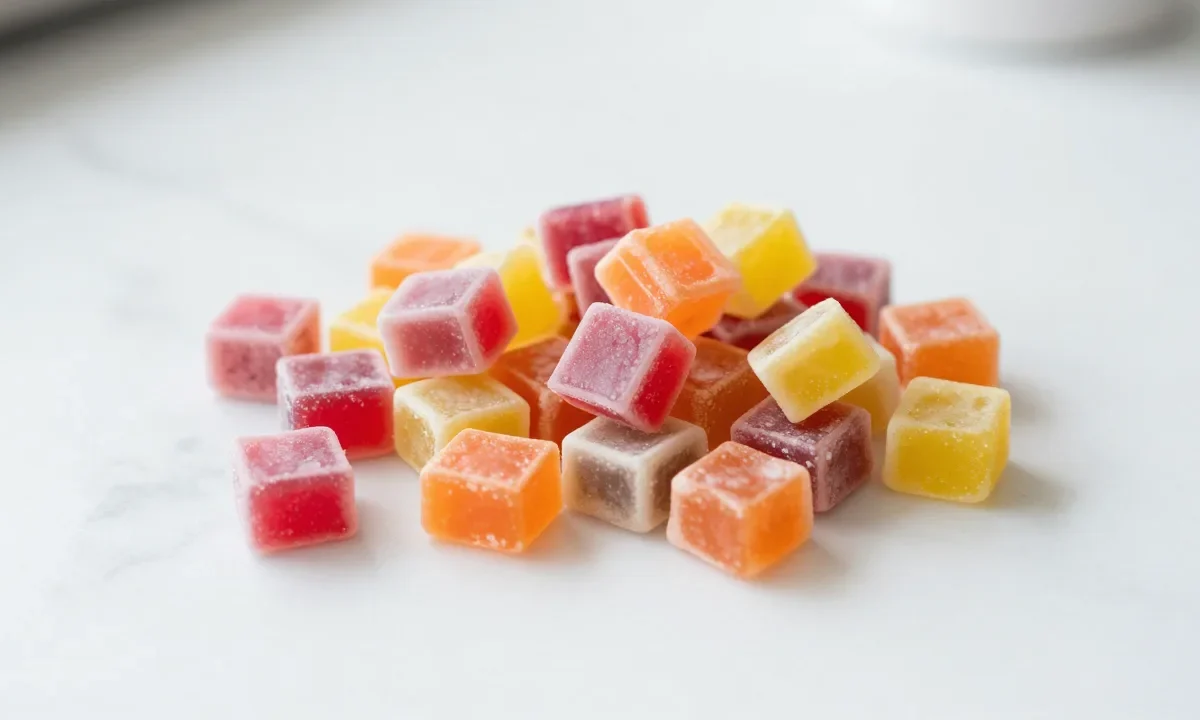
Are Starburst kosher? The classic US Starburst fruit chews list gelatin on the ingredient panel, and we could not find a recognized kosher agency that certifies them, so most kosher consumers skip them. Gummies, imported packs and newer plant-based versions use different recipes, and each one has to be checked on its own package.
The Short Answer on Starburst and Kosher
For the classic square fruit chews sold in the United States, the answer starts with one word on the ingredient panel: gelatin. The Original Fruit Chews made by Mars Wrigley Confectionery US list sugar, corn syrup, hydrogenated palm kernel oil, citric acid, dextrin, apple juice from concentrate, modified cornstarch, flavors, colors and gelatin, as you can see on a typical retailer listing for the 2.07 oz pack.
Gelatin is the ingredient that decides everything here. Commercial gelatin comes from animal skins and bones, and unless it comes from kosher animals processed under supervision, kosher agencies do not accept it. That is why a pack of US Starburst chews should not be treated as kosher unless it shows a reliable hechsher printed on that exact package.
In our own searching we did not find a recognized kosher agency that lists Starburst chews as certified. That does not replace reading the bag in your hand, because recipes and plants change. For your own practice and any question about a specific product, ask your rav.
Why Gelatin Is the Whole Question
Chewy candy needs something to give it that soft, springy bite, and gelatin does the job cheaply. The problem is where it comes from. The Star-K explains in its article on gelatin that commercial gelatin is made from the bones and skins of animals, or the skins and scales of fish, and that most of it comes from non-kosher sources such as pigs.
The Star-K’s position is that what comes from a non-kosher source stays non-kosher, even after heavy processing. Some people have heard that gelatin is so changed by processing that it no longer counts as food. That view exists in halakhic literature, but the major American agencies do not rely on it for the products they certify. Communities differ on the fine points, so your rav is the right address for the details.
Kosher gelatin does exist. OU Kosher describes bovine gelatin made from the hides of kosher-slaughtered cattle, fish gelatin made from kosher fish skins, and plant-based gelling agents. If a candy company used one of those under supervision, the package would normally say so with a hechsher. For a deeper look at the ingredient itself, see our guide on whether gelatin is kosher.
What Mars Has Said About Starburst Gelatin
The clearest public statement we found is old, so treat it as background, not as today’s label. In 2010 the Vegetarian Resource Group reported that Wrigley customer service told them Starburst still contained non-kosher beef-derived gelatin. The same report noted that Skittles had dropped gelatin in a 2009 reformulation, while Starburst kept it.
That history is useful because it shows the brand knows where its gelatin comes from and has answered the question before. It also shows that recipes change. Skittles changed; Starburst could too. A statement from more than fifteen years ago cannot tell you what is in a bag printed this year, and online claims about the animal source vary from site to site.
So the rule is simple. Read the current ingredient panel and look for the hechsher. If gelatin is listed and there is no kosher symbol, put the bag back. If you want an official answer about a current product, the number printed on the pack goes to Mars Wrigley consumer care, and they can tell you what the label does not. Our article on Skittles and their ingredients covers the sister brand in detail.
Take a photo of the product and KosherCheck checks it against your standards in seconds, with the reasons why.
Chews, Gummies, Minis and Jellybeans Are Not One Product
Starburst is a brand name stretched over many formats: the original square chews, FaveReds and other flavor packs, gummies, jellybeans, Minis and seasonal shapes. Each format has its own recipe, and some are made in different plants. One answer for “Starburst” does not cover all of them.
Here is a good example. In 2021 the brand launched Plant Based Original Gummies in the US, a gummy made without gelatin. That sounds like good news, and it removes the biggest problem. But a vegan or plant-based claim is not a kosher claim. A candy can be free of animal ingredients and still use flavors, colors or equipment that no agency has checked. Without a hechsher, the plant-based label tells you what is missing, not that the product is kosher.
When you look at any Starburst bag, go through the same three steps. First, find the ingredient list and look for gelatin. Second, look near the brand name, the nutrition panel and the seam of the bag for a kosher symbol. Third, if there is a letter next to the symbol, such as D for dairy, note it before deciding when to eat it.
UK and Imported Starburst Are a Different Story
Travel and import shops add another layer. According to the Starburst entry on Wikipedia, Starburst sold in the UK is vegetarian, while the US version lists gelatin. If a friend brings a pack back from London, or you see a British bag in an import aisle, the ingredient list may look very different from the American one.
Vegetarian still is not the same as kosher. A UK pack without gelatin can be a better starting point, but you need a hechsher that you trust, and many European candies are simply not certified. In the UK, kosher shoppers often rely on published lists from local kashrut authorities instead of symbols on the pack, so the way you check depends on where the candy was made and sold.
The safest habit is to treat every imported bag as a new product. Read the language on the back, find the manufacturer and country, and check whether a recognized agency stands behind it. Our page on how to check any kosher symbol walks through looking up an agency you do not recognize. When you are standing in a store far from home, KosherCheck can help: take a photo of the product and it reads the ingredients and any symbol against the standards you set.
Kosher Alternatives When You Want a Fruit Chew
Giving up Starburst does not mean giving up chewy fruit candy. The kosher candy aisle is full of chews and gummies, and many of them get their texture from ingredients other than animal gelatin. The Star-K’s piece on gelatin substitutes lists pectin from apples and citrus, agar agar and carrageenan from seaweed, and various starches and gums.
Those substitutes still need supervision. The Star-K points out that processed gums require reliable certification so that the ingredients and the equipment are kosher pareve. So when you shop for a replacement, look for three things together: a gelling agent like pectin or starch on the ingredient list, a hechsher you trust on the front or back, and a pareve or dairy marking that fits the meal you plan to eat it after.
For candy that contains gelatin but is certified, the symbol means the agency approved the source. Some people only eat fish or plant-based gelling agents, and some follow stricter views on bovine gelatin; communities differ, so ask your rav. If you would rather not read every small panel in the store, KosherCheck lets you scan the product and checks it against the agencies and standards you picked. The hechsher on the package is what counts.
Passover and Holiday Candy Bags
Around Purim and Passover, people ask whether a candy that is kosher all year is also fine for Pesach. For a chewy candy like Starburst, corn syrup and modified cornstarch come from corn, which many Ashkenazi families treat as kitniyot during Passover. Even a certified chew would need a separate Kosher for Passover marking to be used during the holiday.
Year-round certification and Passover certification are two different checks. A symbol with a P next to it, or the words Kosher for Passover, tells you the agency checked for chametz and, depending on its standard, for kitniyot. A plain hechsher without that marking only covers the rest of the year. If you are unsure which marking your family relies on, ask your rav before the holiday.
Holiday mixed bags deserve extra care. A Halloween or Purim variety bag may mix certified and uncertified candies, and each small wrapper may not carry its own symbol. For a mishloach manot basket, use only candy whose hechsher you have seen on the outer package, and keep the bag until the basket is done.
Frequently asked questions
KosherCheck offers informational guidance and detects certifications and ingredients. It is not a halachic ruling. For a final decision, consult your rabbi.