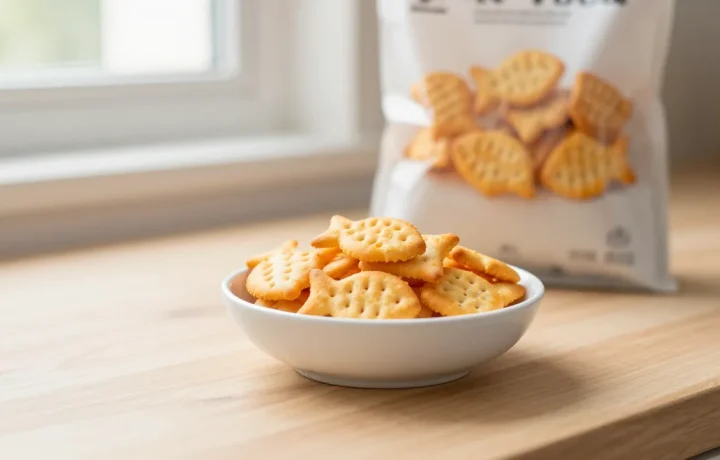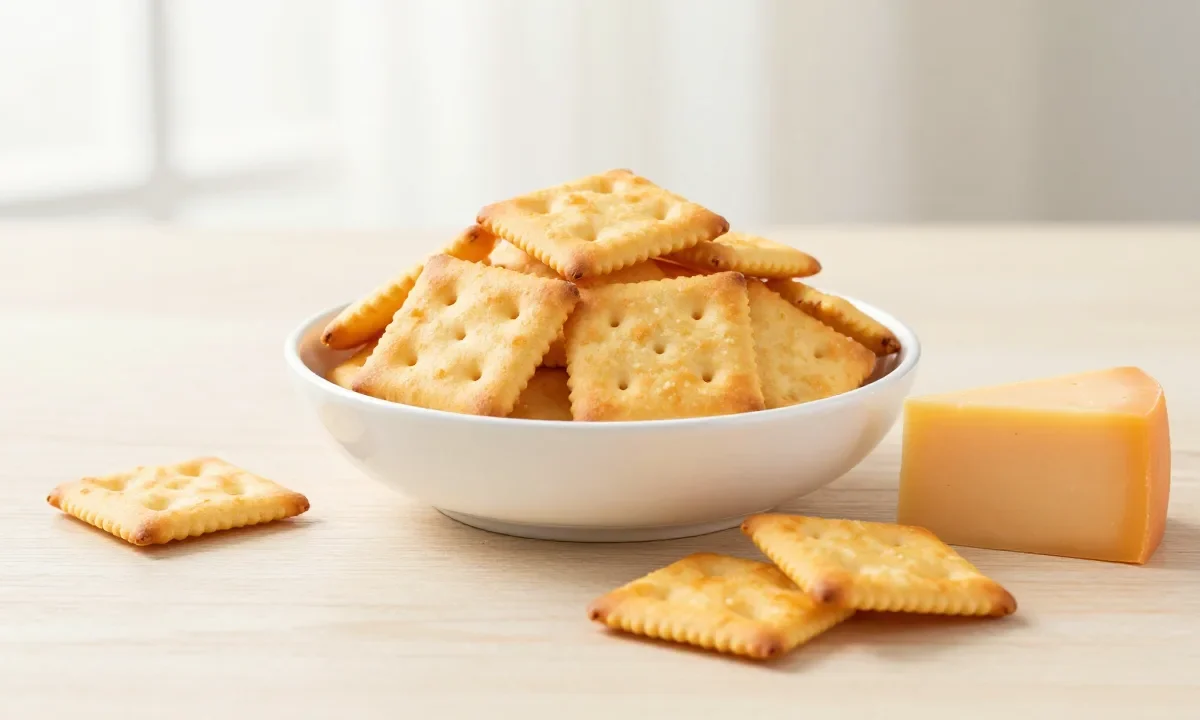
Yes, Cheez-Its sold in the United States are certified kosher, and they are dairy. The manufacturer’s spec sheets list the symbol as OK-D from OK Kosher, not the OU, and the real cheese inside means they are never pareve. They are also chametz, so they are not kosher for Passover.
The Short Answer: Kosher, and Dairy
Cheez-It crackers sold in the United States are certified kosher, and they are dairy. The certifying agency is OK Kosher, not the OU, which surprises a lot of people who assume every big American snack carries the OU. Kellogg’s own technical spec sheet for Cheez-It Original lists the kosher status as OK-D, and the sheets for Reduced Fat Original and White Cheddar say the same.
The dairy part is not a technicality. The ingredient list includes cheese made with skim milk, and the White Cheddar variety adds whey, butter and whey protein concentrate. So these crackers are dairy by ingredient, not only because of shared equipment. That matters for what you can eat them with and when.
The first thing I check on any Cheez-It box is the small symbol near the nutrition panel or the brand name: a K inside a circle with a D next to it. That mark, printed on the package in your hand, is what counts. A spec sheet from a few years ago is a helpful clue, but recipes and plants change, and the box is the current word.
Why the Title Says OK-D, Not OU-D
OK Kosher and the Orthodox Union are two separate agencies with two separate symbols. The OU is a U inside a circle. The OK is a K inside a circle. Both are widely accepted, and both use a D to flag dairy, which is why the two are easy to blur in memory when you are standing in the snack aisle. Our guide to the OU, OK and Star-K symbols walks through the common marks.
OK Kosher explains its own designations plainly. On its page on the kosher symbols clarified, it says the OK with a D or the word Dairy means a kosher dairy product or a product containing kosher dairy ingredients. A plain OK, or OK with the word Pareve, means neither dairy nor meat. OK DE means dairy equipment: an essentially pareve product made on lines that also run dairy.
Cheez-Its are firmly in the first group. The OK consumer FAQ also makes a point I repeat to anyone new to label reading: a D can appear even when the label shows no obvious dairy, because a company may substitute ingredients or run the product on dairy equipment. With Cheez-Its there is no mystery, since the cheese is right there in the name.
If you want a broader refresher on what each letter means across agencies, our guide to kosher certification letters walks through D, DE, M, F and P side by side.
What Is in a Cheez-It, Ingredient by Ingredient
Reading the ingredient list helps you understand why a hechsher matters here at all. According to Kellogg’s spec sheet for Cheez-It Original, the crackers are enriched wheat flour, vegetable oil (high oleic soybean, soybean, palm and/or canola with TBHQ), and cheese made with skim milk, which itself contains skim milk, whey protein, salt, cheese cultures, enzymes and annatto color. The minor ingredients are salt, paprika, yeast, paprika extract color and soy lecithin.
Two items catch a kosher reader’s eye. The first is enzymes. Cheese is made by curdling milk, traditionally with rennet from an animal’s stomach, and the ingredient list does not tell you the source. The second is the cheese itself. Kosher law treats cheese as its own category, with a rabbinic requirement for Jewish involvement in the cheesemaking, a point the OK’s article on gevinas Yisroel lays out clearly.
None of that can be confirmed by reading the label as a consumer. You cannot tell from the words “cheese cultures, enzymes” whether the cheese was produced under supervision. That is exactly the job of the agency behind the symbol. It is the reason a cheese cracker with no hechsher is a different question from a plain cracker with no hechsher. For the full background on rennet and why cheese needs supervision, see our piece on whether cheese is kosher.
Take a photo of the product and KosherCheck checks it against your standards in seconds, with the reasons why.
Flavors and Varieties: Check Each Box
Cheez-It is not one product. There are many flavors, size formats and spin-off lines, from White Cheddar and Reduced Fat to snack mixes and newer shapes. The spec sheets I found for Original, Reduced Fat Original and White Cheddar all list OK-D. I have not seen documentation for every flavor, so I will not claim the rest carry the same symbol.
My rule is simple: treat each box as its own product. Flavored crackers bring in seasonings, natural and artificial flavors, cheese powders and dairy blends, and each of those ingredients has to be kosher for the finished product to be certified. The White Cheddar list, for example, includes monosodium glutamate, natural and artificial flavor, butter and lactic acid. That longer list is not a red flag; it simply means more ingredients the agency had to approve.
The OK consumer FAQ also notes that some companies produce in multiple facilities, not all of which are kosher, and advises checking the packaging before you buy. That applies to limited editions, club-store sizes, variety packs and anything sold outside the US. If you are shopping in Canada, the UK or elsewhere, the formula, factory and agency may differ, so look for a hechsher on that exact package. The same package-first habit applies to other pantry staples, as with Pop-Tarts and their kosher labels.
Eating Cheez-Its With Meat and After Meat
Because Cheez-Its are dairy, they are not eaten with meat or poultry, and they do not go in a meat lunch box. That sounds obvious for a cheese cracker, but it is the kind of thing that slips when a child grabs a snack pack at a fleishig barbecue.
The waiting time between meat and dairy is a matter of family and community custom. The OK page on symbols mentions the common range of one to six hours after eating meat before having dairy. Whatever your custom is, Cheez-Its fall on the dairy side of it. OK also notes that a DE product is essentially pareve and can be eaten soon after meat, but that does not help here, since Cheez-Its are labeled D and contain real cheese.
If you keep Chalav Yisrael, a plain OK-D on its own does not tell you the milk was Chalav Yisrael. Some families accept Chalav Stam for products like this and some do not, and communities differ on how the rules apply to processed dairy ingredients. Our explainer on Chalav Yisrael vs Chalav Stam covers the background, and for your own home, ask your rav.
When I am setting out snacks for guests with different standards, I keep the box on the table rather than pouring the crackers into a bowl. The symbol on the box answers the question before anyone has to ask.
Are Cheez-Its Kosher for Passover?
No. Cheez-Its are made from enriched wheat flour and contain yeast, which makes them chametz. The OU’s guide to which foods are chametz defines chametz as one of the five grains (wheat, barley, rye, oats and spelt) that sat in water for more than 18 minutes, and it lists crackers among the most obvious chametz items to clear out before Pesach.
The year-round OK-D on the box is not a Passover certification. A product that is kosher for Passover carries a separate, specific marking, usually a P or the word Passover next to the symbol, or a dedicated Passover label. The P on a kosher symbol means Passover, not pareve, which is one of the most common mix-ups I hear. Nothing in the Cheez-It spec sheets points to a Passover version.
So during Pesach, a box of Cheez-Its belongs with the rest of your chametz: eaten up beforehand, sold through your rav, or put away according to your practice. If you want a cheesy cracker during the holiday, look for products made specifically for Passover with clear certification. Our kosher for Passover guide explains what to look for on the label.
Checking Your Own Box in the Store
The habit that serves me best is slowing down for five seconds at the shelf. Turn the box, find the symbol, read the letter next to it, and read the flavor name. That small routine works for Cheez-Its and for every other snack in your cart.
If you are new to keeping kosher, or shopping for someone else, it helps to have a second set of eyes. When I am in a hurry, I sometimes take a photo of the product with KosherCheck, which spots the hechsher, reads the ingredient list and checks the result against the standards you set, such as which agencies you trust and whether you keep Chalav Yisrael. It gives a quick kosher, check needed or not kosher result, so you know where to look closer.
That tool is a reading aid, not a ruling. The hechsher printed on the package is what counts, and for questions of halacha, ask your rav. If a box has no symbol, a faded print or a flavor you have never seen, treat it as a question rather than a yes. You can scan the product in KosherCheck to flag what needs a second look, then decide with your own standards and your rabbi’s guidance.
For most American shoppers, the short version holds: Cheez-Its with the OK-D are kosher dairy, not pareve, and never for Passover.
Frequently asked questions
KosherCheck offers informational guidance and detects certifications and ingredients. It is not a halachic ruling. For a final decision, consult your rabbi.