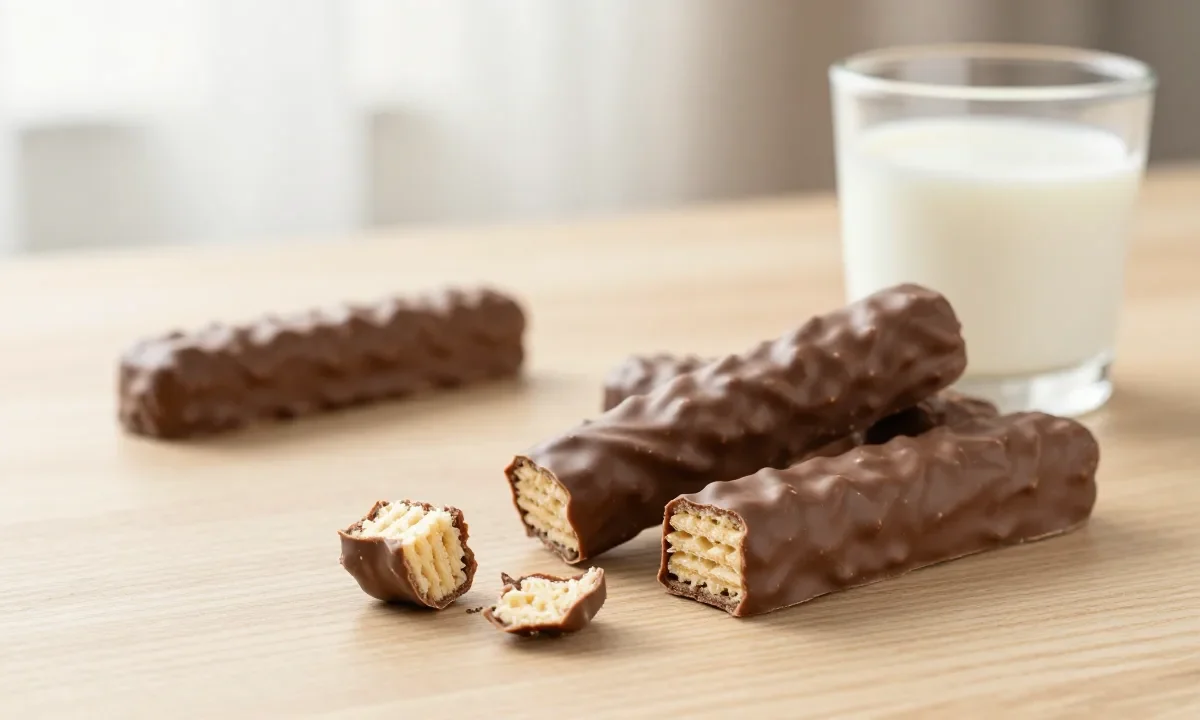
Are Kit Kats kosher? The Kit Kats sold in the United States are made by Hershey and certified OU-D, which means kosher dairy. Everywhere else the bar comes from Nestlé, and its status depends on the country and the factory, so the wrapper in your hand is what you have to read.
Why There Is More Than One Kit Kat
Kit Kat is one brand with two makers. Nestlé owns the name worldwide and produces the bar in factories around the globe, but in the United States the bar is made by the Hershey Company under a licence that goes back to 1970, when Rowntree, the original British owner, signed the deal with Hershey. When Nestlé bought Rowntree in 1988 it had to honor that agreement, which is why the history of the brand still splits along the US border.
For a kosher shopper that split is the whole story. A hechsher does not certify a brand name. It certifies a specific product made in a specific plant under a specific agency’s supervision. Two bars with the same red logo can come from different companies, use different chocolate recipes, buy ingredients from different suppliers and run on different equipment. One can carry a reliable hechsher while the other carries none.
So the first question to ask about any Kit Kat is not “is Kit Kat kosher” but “who made this one.” The answer is usually printed in small type near the ingredient panel: Hershey in Pennsylvania for American bars, Nestlé for bars made in the UK, Canada, Europe, Asia and most other markets. Once you know the maker, you know which agency, if any, you should expect to find on the wrapper.
US Kit Kats: Hershey and the OU-D
Hershey uses the Orthodox Union for its kosher certification, and Kit Kat is on the list. The OU’s current certification letter for Hershey retail products, valid through January 2027, names the classic Crisp Wafers in Chocolate Candy Bar, the snack size, the Big Kat, the Minis, the White Creme bar, Dark Chocolate, the Duos Mint bar and seasonal flavors like Birthday Cake. Every single Kit Kat on that letter is listed as Dairy, with the note that the -D symbol is required on the package.
That last detail is the useful one. The letter is not something you will carry to the store, but the OU-D on the wrapper is. On a US Kit Kat, look near the nutrition panel or the bottom seam of the bar for the U inside a circle with a D next to it. If it is there, the bar is under OU supervision as a dairy product.
One thing surprises people: the dark chocolate Kit Kat is OU-D too. It is easy to assume dark chocolate means pareve, but the agency lists that bar as Dairy, so it should be treated like the milk chocolate one. If you want a refresher on what that suffix means for your meal, our guide to the D, M and P letters on kosher labels walks through it.
What OU-D Means at Your Table
Kit Kat really does contain milk. The US ingredient list includes lactose, skim milk and milk fat alongside sugar, cocoa butter, wheat flour and chocolate, so the D is not a technicality about shared equipment. In practice that means a Kit Kat is not eaten together with meat, and after a meat meal you wait the interval your family keeps before having one. Customs on that waiting time differ between communities, so ask your rav if you are unsure what applies to you.
The OU-D on its own does not tell you the milk is Chalav Yisrael. If your home keeps that standard, a plain OU-D candy bar does not meet it unless the package says so, and that is a question about your practice rather than about Kit Kat. Our explainer on Chalav Yisrael vs Chalav Stam covers how different families approach it.
The same logic applies to other OU-D sweets in the candy aisle. We looked at it in detail for Oreo and its OU-D label, and the reading is the same here: the symbol tells you who supervises the product and which category it belongs to, and your own standards decide the rest. When you pick up a bar you do not recognize, you can take a photo of the product with KosherCheck, which finds the hechsher, reads the ingredient list and checks it against the agencies and dairy standards you have set, and then look at the wrapper yourself before it goes in the cart.
Take a photo of the product and KosherCheck checks it against your standards in seconds, with the reasons why.
UK Kit Kats: Nestlé and the London Beth Din Guide
British Kit Kats are made by Nestlé, and their recipe is different from Hershey’s. The UK four finger bar lists whole milk powder, whey powder, skimmed milk powder and butterfat among its ingredients, which is one reason British and American fans argue about which one tastes better. For a kosher shopper, the more important difference is how the bar is approved.
In the UK, many kosher shoppers rely on the London Beth Din’s Really Jewish Food Guide and its app, Is It Kosher. The guide approves a large number of supermarket products by listing them, not by putting a symbol on the pack. Its November 2025 update lists Nestlé Kit Kat Cookies & Cream and Kit Kat Nescafe Mocha as D, which the guide’s key defines as dairy, not Chalav Yisrael. Those entries do not carry the KLBD certification mark, so do not expect to see a hechsher printed on the wrapper.
That has two practical consequences. First, the approval lives in the guide, so you confirm a specific variety there, not on the bar. Flavors and sizes come and go, and only the listed ones count. Second, a guide listing reflects the London Beth Din’s standard. Some families only buy products with a hechsher on the package, while others are comfortable relying on the guide. That is exactly the kind of question to bring to your rav.
Canadian and Other Imported Kit Kats
Cross the border north and the picture changes again. COR, the Kashruth Council of Canada, addresses this in its consumer FAQ: Kit Kat in the United States is made by Hershey under OU certification, while in Canada it is made by Nestlé Canada, which does not have kosher certification. COR points out that a different manufacturer means a different formula, different source ingredients and a different production process, so a kosher status in one country does not travel with the brand name.
If you live near the border or shop at a store that stocks Canadian candy, the maker line on the wrapper settles it. A Hershey bar with the OU-D is the US product. A Nestlé Canada bar without a hechsher is not certified, no matter how familiar it looks.
The same caution applies to the imported Kit Kats that specialty shops love to stock: matcha and fruit flavors from Japan, European editions, Middle Eastern packs. These are Nestlé products made in local factories for local markets. Some countries have their own kosher programs, and a particular import may or may not carry a recognized symbol. Treat each one as a new product: read the wrapper, find the hechsher if there is one, and confirm the agency on its own website. If you cannot read the language on the pack, you can scan the product with KosherCheck to pull out the symbol and the ingredients, then confirm the hechsher yourself. Shopping abroad follows the same rule: the wrapper and its hechsher decide, not the brand.
Kit Kats on Passover and a Quick Checklist
Kit Kat is a wafer bar, and the wafer is made from wheat flour. Wheat is one of the five grains (wheat, barley, rye, oats and spelt), so every Kit Kat contains chametz and none of them is a Passover candy. A year round OU-D says nothing about Pesach. Questions about chametz bought after the holiday, or a bar left in the pantry over Pesach, depend on who owned it and when, so ask your rav.
For the rest of the year, here is a routine for any Kit Kat, from a gas station bar to a souvenir from Tokyo.
- Read the maker line first: Hershey means the US product, Nestlé means another country’s recipe.
- On a Hershey bar, look for the OU-D printed on the wrapper.
- On a UK Nestlé bar, look up that exact variety in the London Beth Din guide.
- On a Canadian or other imported Nestlé bar, look for a hechsher on the package and confirm the agency on its own site.
- Treat every certified Kit Kat as dairy, including dark chocolate.
- Do not keep any Kit Kat for Passover.
Formulas and certifications change, and a factory can switch agencies or drop a product. The hechsher on the package in front of you is what counts, and for anything that touches your own standards, ask your rav.
Frequently asked questions
KosherCheck offers informational guidance and detects certifications and ingredients. It is not a halachic ruling. For a final decision, consult your rabbi.