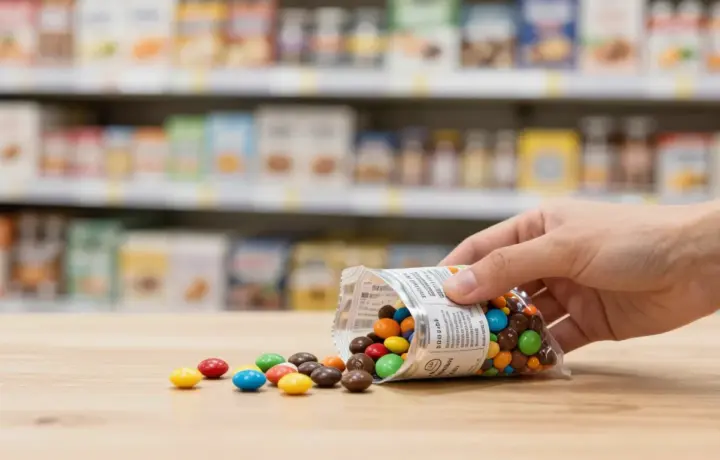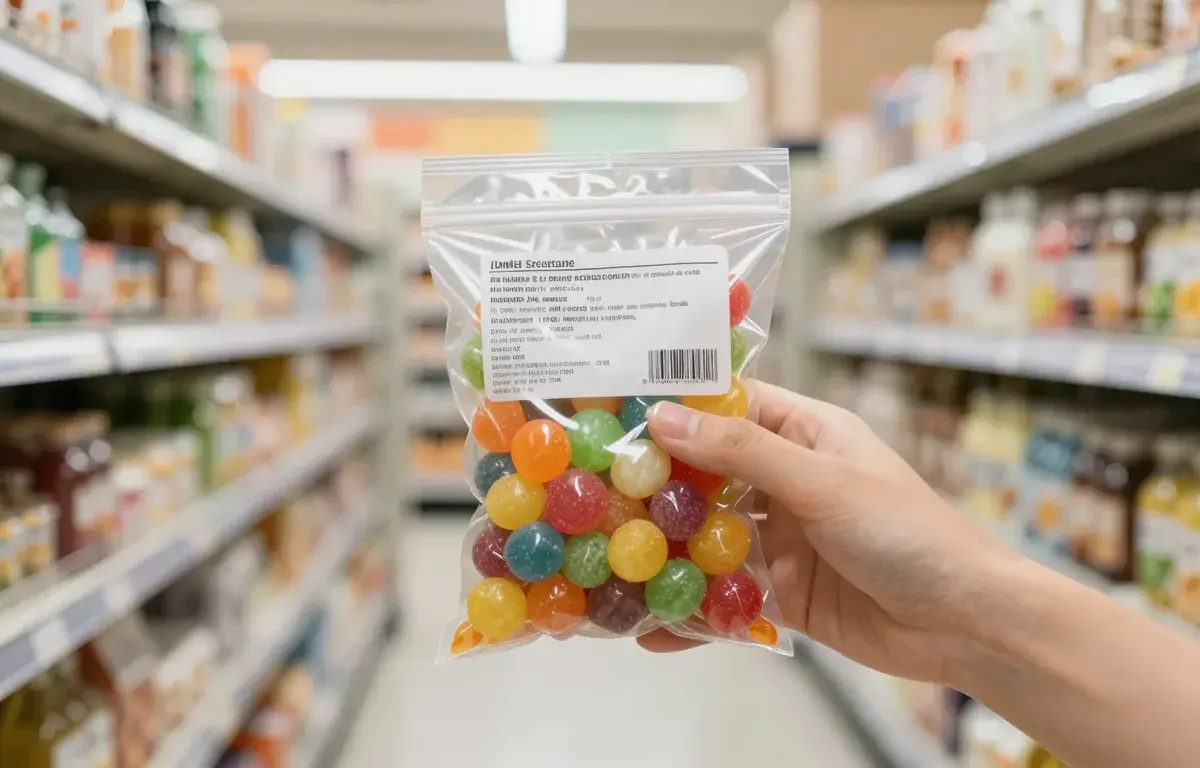
In the US, Skittles no longer contain gelatin and the ingredients read as pareve, yet the standard bag carries no kosher symbol. Without a hechsher, a careful kosher shopper treats them as uncertified rather than kosher. Recipes also change by country, so the answer depends on the exact bag.
The short answer on Skittles
Skittles sit in an awkward spot for anyone who keeps kosher. In the United States the current recipe has no gelatin, and the ingredient list reads as pareve. The standard bag still carries no kosher symbol, though, no OU, no OK, no Star-K.
When I shop for my family, the first thing I check on a label is the hechsher, not the ingredient list. A clean set of ingredients without a trusted symbol is not the same as certified kosher. For Skittles that gap is the entire answer.
For a fuller picture of how the meat, dairy, and pareve categories work, see our kosher categories guide. Formulations also shift by country and by production run, so treat any single label as a snapshot. If Skittles matter for your table, ask your own rav rather than the wrapper.
What is actually inside a bag of Skittles
A US bag of Skittles starts with sugar, corn syrup, and hydrogenated palm kernel oil. None of those are meat or dairy, so the base is pareve in character. The oil is plant based, which removes the usual animal fat concern.
After that come the smaller items: citric acid, tapioca dextrin, modified corn starch, natural and artificial flavors, and a row of added colors. The colors in the US version are synthetic dyes such as Red 40, Yellow 5, Yellow 6, Blue 1, and Blue 2. These are petroleum based, not the insect derived red you find in some candies.
That distinction matters, because a few sweets get their red from carmine, which is not kosher. We cover that ingredient in detail in our carmine and E120 guide. Skittles in the US do not use carmine, but the phrase natural and artificial flavors is still a black box. Flavor blends can carry kosher questions that no shopper can resolve from the package alone.
- Sugar and corn syrup, the pareve base
- Hydrogenated palm kernel oil, a plant fat
- Synthetic colors, not insect derived carmine
- Natural and artificial flavors, the part only a certifier can vouch for
The gelatin question and the older recipe
Older bags of Skittles are why this question keeps coming up. For years the US recipe included gelatin, which is usually made from animal collagen and is a serious kosher concern. Around 2010 the maker reformulated the US product and dropped gelatin from the standard fruit flavors.
Gelatin is the classic label trap, because its kosher status depends entirely on the source and the supervision. Our gelatin guide walks through why the same word can mean very different things. The takeaway for Skittles is simple, the current US bag should not list gelatin, so check the panel rather than trusting an old memory.
Even with gelatin gone, the reformulation did not add a hechsher. A product can be free of obvious problem ingredients and still lack the supervision that makes it kosher in practice.
Why the missing symbol matters
A hechsher is a certifying agency stating that it watched the process, not just the ingredient list. That supervision covers the equipment, the flavor sources, and the handling that a shopper never sees. Agencies such as the Orthodox Union certify thousands of products, and their symbol is what most kosher consumers look for first.
Skittles in the US carry no such mark, so the pareve looking label cannot be verified. This is where a quick scan helps. When I am unsure at the shelf, I open KosherCheck and let it read the barcode and the label, then check what it finds against the standards I keep.
The app is a detection tool, not a ruling. It tells me what the label shows and where the gaps are, which is exactly what an uncertified product like Skittles needs. For a final decision on anything borderline, your rav is the address, not an app and not a wrapper.
Scan the barcode or label and KosherCheck checks it against your standards in seconds, with the reasons why.
Skittles are not the same in every country
The Skittles you buy abroad may not match the US recipe at all. In the United Kingdom the product has been marketed as suitable for vegetarians, with a different color and flavor system. That does not make it kosher, but it shows how far formulations drift across borders.
In Israel some imported or locally distributed candies carry a local kosher certification that the US versions lack. Never assume a symbol you saw in one country applies to the same brand somewhere else. Reading labels abroad is its own skill, and the wording and symbols change from market to market.
Because of this drift, a kosher verdict on Skittles is always tied to a specific bag in a specific country. A photo of an American label tells you nothing reliable about a bag bought in Tel Aviv or London.
How to check a bag of Skittles yourself
You can settle most of this at the shelf in under a minute. Start with the symbol, then read the panel, then decide whether you need to ask your rav.
If you would rather not hold all of that in your head, let a tool do the reading. I keep KosherCheck on my phone so it can spot the hechsher, parse the ingredients, and weigh them against my personal standards in seconds. For more product questions like this one, browse our is it kosher section.
The honest bottom line on Skittles is that the US recipe looks clean but stays uncertified. That combination is exactly the kind of gray area where a careful shopper leans on a symbol, and where a real ruling belongs to your rav.
Frequently asked questions
KosherCheck offers informational guidance and detects certifications and ingredients. It is not a halachic ruling. For a final decision, consult your rabbi.