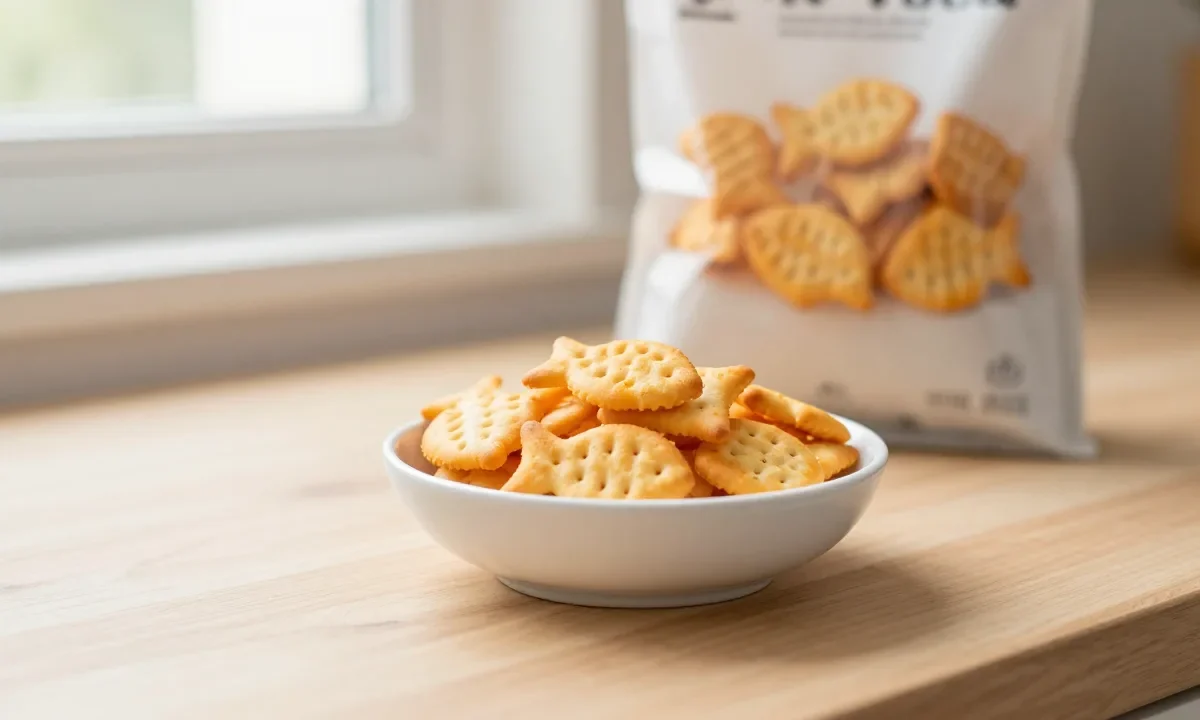
Are Goldfish crackers kosher? In the US, Goldfish bags do not carry a hechsher, so kosher consumers do not treat them as kosher. Every variety I checked also contains milk, and the cheddar ones use cheese made with enzymes, which is exactly the kind of ingredient that needs supervision.
The Short Answer: No Hechsher on US Goldfish Bags
When I pick up a bag of Goldfish in an American supermarket, the first place my eyes go is the front panel near the logo and then the back near the ingredient panel. That is where an OU, OK, Star-K or any other hechsher would sit. On the product pages of the official Goldfish site, there is no kosher symbol and no kosher claim, and I have not found a hechsher on US bags.
That stands out because the same company does make certified products. Pepperidge Farm’s own page for its Milano cookies says plainly that Milano cookies are kosher. So the brand knows how to certify a product and says so when it does. The Goldfish line simply does not carry that claim.
For a kosher consumer, that settles the practical question. A product without reliable certification is not something we treat as kosher, no matter how harmless the ingredients look. Formulas and packaging can change, so I still read the bag every time instead of trusting memory.
Why Cheese Makes Goldfish a Hard Case
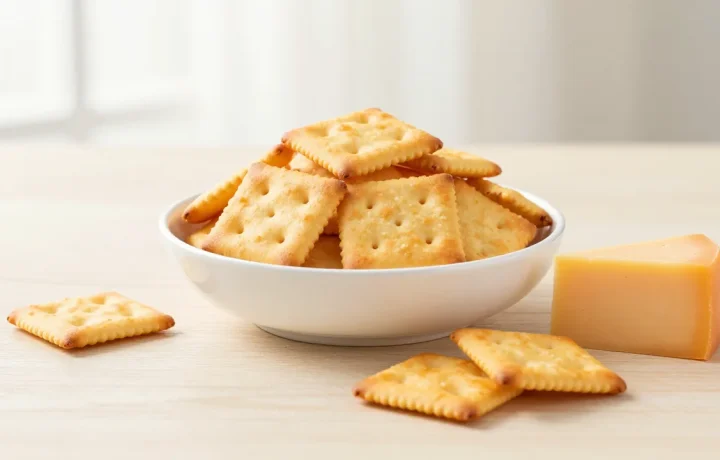
The classic orange Goldfish lists cheddar cheese as its second ingredient, described on the label as cultured milk, salt and enzymes, plus annatto for color. You can see it on the official Cheddar crackers page. That one word, enzymes, is the heart of the problem.
Hard cheese is set with rennet, and rennet was historically taken from the stomach lining of a calf. The Sages forbade cheese made without rabbinic supervision, a rule called gevinat akum. The OU’s cheese FAQ explains that this applies even when the rennet used today is microbial or synthetic, and that the small amount of rennet is not simply nullified because it is what gives the cheese its form. The kashrut.com cheese article covers the same ground in more detail.
So an unsupervised cheese inside a cracker is not a small detail you can wave away. It is the reason a cheese snack needs a reliable hechsher more than almost any other product on the shelf. I walk through the rennet issue in depth in our guide on whether cheese is kosher.
Flavor by Flavor: What the Ingredient Lists Show
Here is what the official Goldfish product pages list for some of the best known varieties, read with kosher eyes. None of these pages mention kosher certification.
- Cheddar: cheddar cheese with enzymes. Dairy, and the cheese itself raises the gevinat akum question.
- Flavor Blasted Xtra Cheddar: cheddar cheese, enzyme modified cheddar cheese, whey, milkfat and natural flavor. More cheese, more questions.
- Original: no cheese, but nonfat milk, so it is still a dairy product.
- Pretzel: no cheese, but nonfat milk again. Many shoppers assume pretzels are pareve. These are not.
- S’mores Grahams: dehydrated marshmallows made with gelatin, plus nonfat milk.
The pattern is clear. Every variety I looked at contains milk in some form, so even if a hechsher were ever added, these would be dairy products and not pareve. You can read the full lists on the Pretzel and S’mores Grahams pages.
Take a photo of the product and KosherCheck checks it against your standards in seconds, with the reasons why.
Why a Clean Ingredient List Is Not Enough
It is tempting to look at the Original or Pretzel list, see flour, oil, salt and milk, and decide they must be fine. It is an understandable instinct. But a kosher agency does not certify an ingredient list. It certifies a plant, a production line and a supply chain.
Flour can be enriched with vitamins, oils can be processed on shared equipment, and flavors and enzymes come from suppliers who need their own approval. Above all, crackers are baked in ovens and on lines that often run several products. If a cheese variety with unsupervised cheese runs on the same line as a pretzel variety, the equipment itself can affect the kosher status of everything made on it. A rabbinic field representative checks these things; a shopper reading a label cannot.
That is why the honest answer for the Original and Pretzel varieties is the same as for Cheddar. Without a hechsher on the bag, they are not considered kosher, and the absence of cheese does not change that. If you want to see what a certified cheese cracker looks like by comparison, our piece on Cheez-It and the OK-D label shows the difference a symbol makes.
Gelatin, Marshmallows and the Sweet Varieties
The sweet side of the Goldfish family deserves its own look. The S’mores Grahams list dehydrated marshmallows, and those marshmallows contain gelatin. Gelatin is usually made from animal bones and hides, and the label does not say which animal or how it was processed.
Kosher authorities hold different positions on gelatin, and the OU’s article on kosher gelatin explains why the OU only certifies gelatin from kosher sources. Communities differ on some of the finer points, so ask your rav if you have a specific question. For a product with no hechsher at all, the debate never even begins: you have unknown gelatin plus unsupervised production.
If you love the sweet varieties for a lunchbox, the practical path is to look for a certified graham snack and read its symbol. Our gelatin label guide shows how gelatin appears on ingredient panels and what kosher gelatin is usually called on a certified package. When I am unsure what a sweet snack contains, I take a photo of the product with KosherCheck and let it flag the gelatin and the missing symbol while I keep my hands on the cart.
How to Check Any Bag Before It Goes in the Cart
Goldfish is one product, but the same habit protects you on every snack aisle. This is the routine I follow, and it takes about ten seconds per bag.
First, look for the hechsher itself. A recognized agency symbol is the only thing that answers the question; the word kosher alone or a plain K needs more checking. Second, read the letter next to it. A D means dairy, and some agencies use DE for products made on dairy equipment, as COR explains. Third, scan the ingredient panel for cheese, whey, gelatin, carmine and natural flavor, because those tell you how strict the supervision needs to be.
Last, remember that bags change. A new flavor, a limited edition with a cartoon on it, or an imported bag from another country can come from a different plant with a different status. When I want a second pair of eyes, I scan the product with KosherCheck, which reads the symbol and ingredients and checks them against the standards I set, such as the agencies I trust and Chalav Yisrael. The hechsher on the package is what counts, and for rulings I ask my rav.
Frequently asked questions
KosherCheck offers informational guidance and detects certifications and ingredients. It is not a halachic ruling. For a final decision, consult your rabbi.