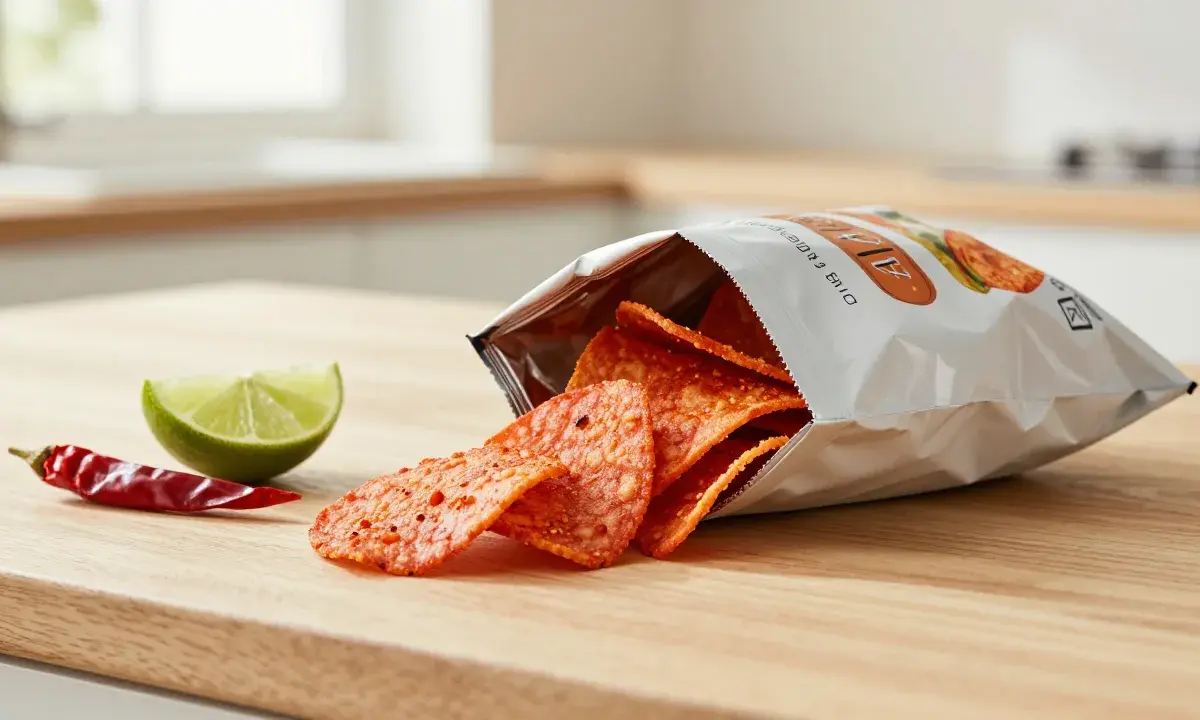
Takis are not certified kosher. We have not found a hechsher on Takis rolled tortilla chips in the US or Canada, and OU Kosher rabbis have described Takis as a snack that is not certified kosher. Since formulas, factories and packaging change, the bag in your hand is the final word, so here is how to read it.
What the Takis Company Itself Says
The most direct source on Takis is the company that makes them. Takis are a Barcel brand, and the Canadian Takis site run by Bimbo Canada has a short frequently asked questions page that answers the dietary questions people actually send in.
Two answers matter for a kosher shopper. First, when asked whether Takis use animal sourced ingredients, the company says Takis “may contain dairy.” Second, when asked about halal, it says none of the ingredients include pork, lard, pepsin, pork gelatin, alcohol, cochineal or carmine, but that the products “have not been certified by a qualified authority.” Nowhere on that page is a kosher certification mentioned.
That is useful, and it is also where many people stop too early. A company telling you what is not in a snack is not the same as a rabbinic agency supervising the plant, the flavors and the equipment. A hechsher is a promise that someone outside the company checked all of that. A list of missing ingredients is a promise that nobody outside the company checked anything. For a kosher consumer, those are very different statements, and the second one does not let you skip the first.
Why the Ingredient List Cannot Settle It
Look at a US bag of Takis Fuego and the ingredients read like a lot of other tortilla chips. The published ingredient list runs corn masa flour, vegetable oils, salt, sugar, natural and artificial flavor, citric acid, hydrolyzed soy protein, yeast extract, MSG, maltodextrin, colors, onion powder, chili pepper and a few more additives. Nothing on it jumps out as meat or milk.
The phrase that should slow you down is “natural and artificial flavor.” OK Kosher explains in Savor the Flavor that natural flavors are built from many chemical components, just as artificial ones are, and the source of each component is not shown to the shopper. The OU makes the dairy point directly in its guide to what OU-D means: under US rules, a natural flavor can be derived from dairy products, and because flavors are so concentrated, a tiny amount can still affect a product’s kosher status.
So when a snack lists flavors and carries no hechsher, the honest answer is not “probably fine.” It is “unknown.” The label simply does not carry the information you need. The first thing to check on any seasoned chip is not the ingredient panel. It is the symbol near it.
Hot Seasoning Lines and Shared Equipment
Even if every flavor in Takis were kosher, the equipment would still matter. The OU’s article Snacking Kosher: It’s Harder Than You Thought walks through how snack plants actually run, and tortilla style chips are one of the trickier cases.
According to the OU, rolled dough products like tortilla and corn chips are fried and then seasoned right away. These chips are thicker than potato chips and hold their heat, and between that residual heat and the volume of production, the tumblers and belts get hot enough to absorb the status of whatever flavors pass through them. The same article notes that most plants run both dairy and non-dairy seasonings, and many also run non-kosher ones, especially cheese flavors.
That is exactly the kind of setup a certifying agency manages with cleanouts, scheduling and separate lines. It is also why some chips with no dairy ingredients still carry a dairy marker. Takis come in many flavors, and the company itself warns they may contain dairy. Without an agency watching the line, there is no way for anyone outside the plant to know what ran before the bag of Fuego you are holding. This is not a criticism of the company. It is simply what “not certified” means in practice.
Take a photo of the product and KosherCheck checks it against your standards in seconds, with the reasons why.
How to Read a Takis Bag in the US and Abroad
When you pick up any bag of chips, check three spots in the same order. First, the front panel, usually near a lower corner. Second, the back, next to or under the ingredient list. Third, the seam or bottom fold, where some brands print small symbols. A real hechsher is a specific registered mark, like the OU, OK, Star-K or cRc, often with a D or DE next to it for dairy. Our guide to kosher certification letters explains what D, DE, M and P mean.
On the Takis bags we have seen in the US and Canada, you will not find one of those marks. Look for the allergen statement and the Canadian “may contain dairy” warning instead, which tells you something about the line but nothing about kosher status.
Takis are sold in many countries, and a bag bought abroad may come from a different plant with a different formula. If you are traveling or buying an imported bag, read that bag on its own terms. If you find a symbol you do not recognize, check it with the agency’s own website, and see what a hechsher actually is before trusting it.
When you are standing in a store aisle and the packaging is busy, you can take a photo of the product with KosherCheck to spot the symbol and flag ingredients against the standards you keep. The hechsher on the package is still what counts, and for rulings ask your rav.
What OU Kosher Rabbis Told Teens About Takis
Takis come up so often in kosher homes that OU Kosher rabbis have been asked about them in person. In March 2024, the Arizona Jewish News reported on a visit by OU Kosher rabbinic coordinators to Phoenix, where local NCSY teens met with them. One of the first questions was about Takis versus the Trader Joe’s chips that are often passed around as a kosher stand-in.
The article describes Takis as “a beloved campus snack that is not certified kosher.” OU Kosher Rabbinic Coordinator Rabbi Eli Eleff told the teens that a brand might not seek certification for many reasons, including cost, equipment or manpower, or simply not realizing the value of a hechsher. His advice was practical: as consumers they have power, and they should “call up Takis and ask for it.” The article adds that some companies have let a certification lapse and then renewed it after hundreds of customers called to request it.
That answer is welcome because it treats kosher shoppers as part of the market, not as people who just do without. If Takis matter to your family, a polite message to Barcel asking for certification is a reasonable thing to send. Until a hechsher appears on the bag, though, the status stays the same.
Kosher Alternatives to Takis
The craving for a rolled, fiery lime chip is real, and kosher shoppers have found options. The best known is Trader Joe’s Rolled Corn Tortilla Chips, Chili and Lime flavored. A student newspaper at Shalhevet High School in Los Angeles found in a 2019 poll that these were the favorite kosher snack among students who answered, and the TikTok video described in the Arizona article pointed to an OU symbol on the front of the bag.
Please do not take a video or an article as your hechsher. Store brands can change suppliers, and the symbol can change with them. Pick up the bag, find the mark, and note whether it is a plain OU or carries a D or DE. That letter decides whether you can eat it with a meat meal, and communities differ on how they treat dairy equipment, so ask your rav if you are unsure.
The same rules apply to other spicy chips. Our article on whether Doritos are kosher shows how one brand can have certified and uncertified flavors side by side, and the OU’s product search lets you confirm a specific product it certifies. If you would rather not squint at small print while your kids wait, KosherCheck can read the package from a quick photo and tell you what to double check. You can browse more snack guides in our is it kosher section.
Frequently asked questions
KosherCheck offers informational guidance and detects certifications and ingredients. It is not a halachic ruling. For a final decision, consult your rabbi.