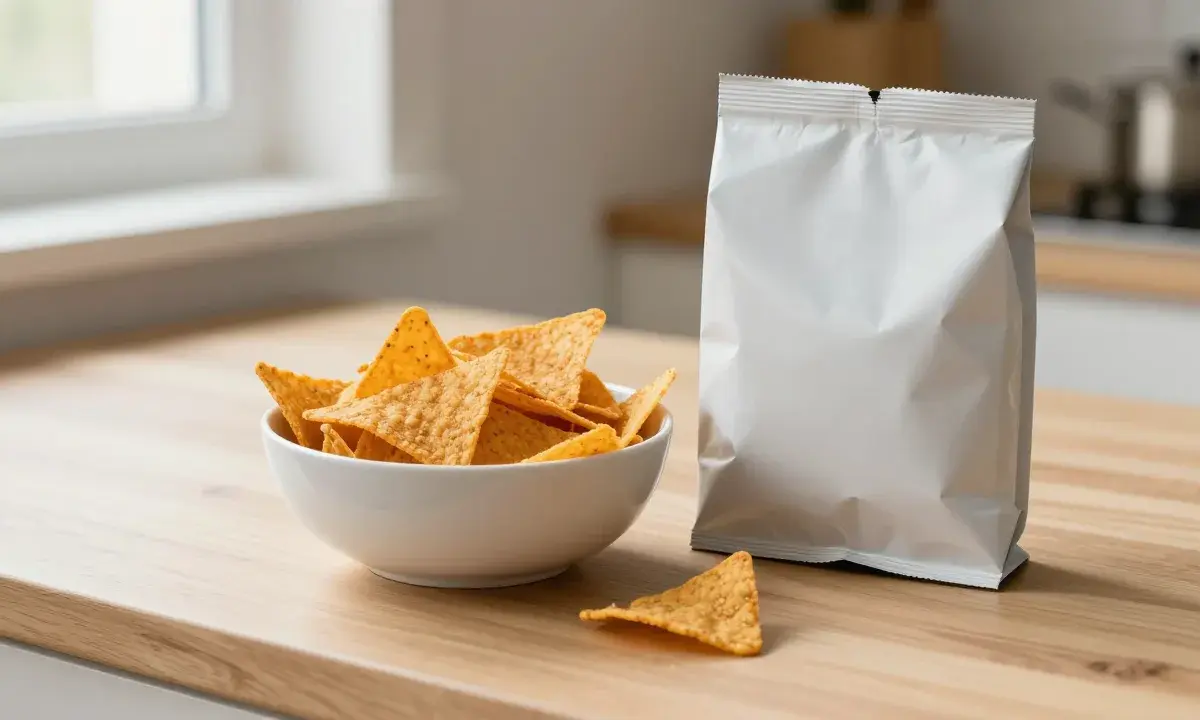
Some Doritos are kosher, but most popular US flavors are not on Frito-Lay’s OU list, and the ones that are, the Simply Doritos line, are certified dairy. The only reliable answer is the hechsher printed on the bag you are holding, and it can differ by flavor and country.
The Short Answer: It Depends on the Bag
Doritos is not one product. It is a brand with dozens of flavors, sizes and limited editions, made in different plants and sold in many countries. Kosher status belongs to a specific product, not to the brand name on the front. So the honest answer to “are Doritos kosher” is: some are, many are not certified, and the only way to know is to check the package you are holding.
Here is what the primary sources confirm. Frito-Lay, the PepsiCo division that makes Doritos in the US, says in its consumer help center that it works with two kosher agencies, the Orthodox Union and Triangle K, and keeps a separate certified list for each. The OU letter of certification for Frito-Lay, dated December 30, 2025 and valid through December 31, 2026, lists only a handful of Doritos-branded items, and every one of them is marked Dairy.
That leaves the classic bags, Nacho Cheese, Cool Ranch, Spicy Sweet Chili and the rest, in a gray zone for anyone reading online. They are not on that OU letter. Whether a given bag carries another agency’s symbol is something you settle at the shelf, not from a blog post. The basic habit still works: turn the bag over, find the hechsher, and read any letter next to it before you open the bag.
What the OU Letter Actually Lists
To know what an agency really certifies, skip the rumors and go to the letter of certification. For Frito-Lay, the OU letter is a 19-page document that names the plants, the brands and each product with its status. Under the brand heading “Simply Doritos” it lists four products: Organic Spicy White Cheddar, Organic White Cheddar, Simply Doritos White Cheddar Nacho and Simply Doritos Zesty Ranch tortilla chips. All four are listed as Dairy, with the note “-D Symbol required.”
The only other Doritos name on the letter is a crossover snack: Doritos Cool Ranch sunflower seeds, listed under the Spitz brand, also as Dairy. Regular Nacho Cheese and Cool Ranch chips do not appear on the OU list at all.
Two practical points follow. First, “Simply” on the bag matters; it is a different product line from the familiar red and blue bags, so you should not assume one tells you anything about the other. Second, the letter covers specific products under specific conditions. Formulas and certifications change, which is why the OU tells consumers to check its product search and the package itself rather than relying on old lists. When you are unsure, a quick photo with KosherCheck helps you spot the symbol and the ingredient line fast, but the hechsher printed on the bag is what counts.
Why Cheese Flavors Are the Problem
Tortilla chips themselves are simple: corn, oil and salt. The kosher questions start with the seasoning. Most popular Doritos flavors are built on cheese powders, whey, buttermilk and lactose, plus “natural flavors” that can hide more dairy.
Cheese is the hard part. Kosher cheese requires supervision of the cheesemaking itself, and much of the debate centers on rennet, the enzyme that sets the curd. There is more on this in our guide to cheese and rennet. Frito-Lay is open about its side of it: its help center explains that many of the cheeses in its seasonings are made with animal enzymes, and says the snacks on its kosher lists are free of animal enzymes and animal flavors. You can read that in Frito-Lay’s own answer on enzymes.
So a cheesy Doritos flavor is never kosher by default. It needs a reliable agency to have checked every cheese and flavor component in that seasoning, at that plant. If a cheese-flavored bag shows no hechsher, treat it as not kosher, full stop. If it does show one, the next thing to check is whether the symbol is marked dairy, because with these flavors it almost always will be.
Take a photo of the product and KosherCheck checks it against your standards in seconds, with the reasons why.
Reading the D: Dairy Means Dairy
On the Simply Doritos bags, the OU letter requires the OU-D symbol. That small D tells you the product is kosher dairy. It contains dairy ingredients, so in a kosher kitchen it is not eaten with meat, and many people wait after meat before eating it, according to their family custom.
A D on a chip bag surprises some readers, but with cheddar and ranch flavors it is exactly what you would expect. The same OU-D question comes up with Oreo and its OU-D label. Where it gets subtle is “dairy equipment.” The OU explains in Demystifying OU-D that some products contain no dairy ingredients but run on equipment that also handles dairy; it calls these DE. Ashkenazim generally do not eat DE items together with meat, while practice differs in other communities, so ask your rav what your family follows.
Here is the first thing to check on any snack label: is there a letter after the symbol at all? A plain symbol with no letter usually signals pareve on many agencies’ marks, a D means dairy, and an M or “meat” means meat. Our explainer on kosher certification letters walks through D, DE, M and P in more detail. If you are packing chips for a fleishig meal, that one letter decides whether the bag goes in the basket.
US, Canada and Elsewhere: Country Labels Differ
Doritos are made by different PepsiCo businesses around the world, and a bag bought in Toronto, London or Tel Aviv is not the same product as one bought in Dallas. Recipes, suppliers and kosher agencies all vary by country and sometimes by factory. A US certification tells you nothing about a bag made elsewhere.
Canada is a good example. In 2021 the Ottawa Jewish Bulletin reported on kosher Doritos appearing in Canadian grocery and convenience stores, including flavors the writer described as pareve. That is a different situation from the US list, and it shows why you cannot carry one country’s answer across a border. The certifying agency on a Canadian bag will be printed on that bag.
Outside North America, many local kosher authorities publish their own product guides, and imported bags sometimes carry a sticker from a local agency rather than a printed symbol. Travel calls for the most care, because the bag looks identical while the recipe may not be. The rule is simple: read the hechsher on the package in front of you, in the country you are in. If you travel often, a quick photo with KosherCheck can flag the symbol and the dairy ingredients before you reach the checkout, and you still confirm with the printed mark.
How to Check Any Doritos Bag in 30 Seconds
When you pick up a bag of Doritos, or any chip, run the same short routine.
- Find the hechsher. It is usually on the back near the ingredients or the nutrition panel, sometimes on the front near the weight.
- Identify the agency. A U inside an O is the OU; a K inside a triangle is Triangle K; other agencies use other marks.
- Read the letter. D means dairy; no letter often means pareve; check what that agency uses.
- Scan the ingredients for cheese, whey, milk and lactose, which tell you why a bag is dairy.
- No symbol at all means no kosher certification, even if the ingredients look harmless.
Which agencies you rely on is a personal and communal question. Standards differ on cheese, equipment and many other details, and different communities accept different agencies. This guide does not rank agencies; ask your rav. Our guide on how to check any hechsher explains how to look up an agency and what questions to ask.
For Passover, regular Doritos are a separate question. Corn is kitniyot, which Ashkenazi custom avoids on Pesach, and year-round certification is not Passover certification. Look for a specific Kosher for Passover marking, and see our Passover category for the basics.
Frequently asked questions
KosherCheck offers informational guidance and detects certifications and ingredients. It is not a halachic ruling. For a final decision, consult your rabbi.