Sour Patch Kids are kosher when the package carries a recognized hechsher, and the classic American version is certified pareve by the Orthodox Union. The catch is that certification lives on the bag, not on the brand name, so the symbol has to actually be there.
The short answer on Sour Patch Kids
Sour Patch Kids are kosher when the package carries a recognized hechsher, and the classic American version is certified pareve by the Orthodox Union. For a sour candy with this many fans, that is a friendly answer.
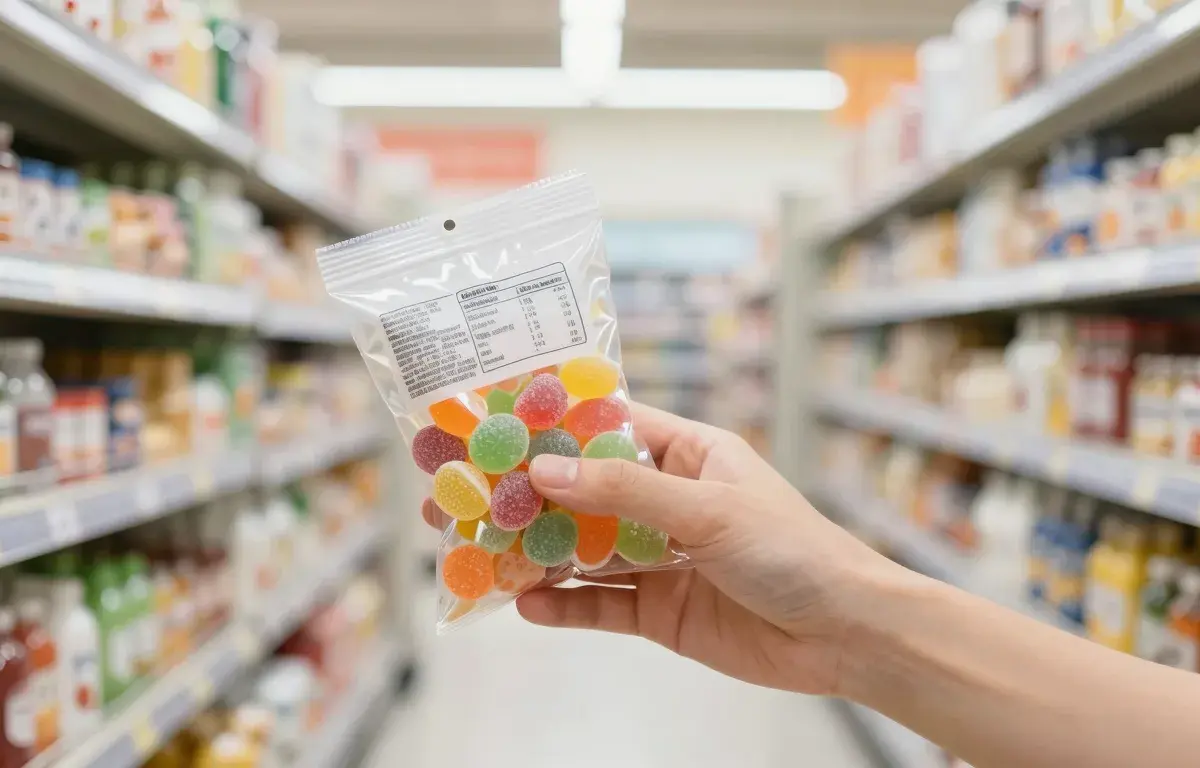
The important detail is the one I always share at the shelf. A brand being kosher in general does not make the exact bag in your hand kosher. Certification is printed near the ingredients, so the symbol has to be there.
When I check a candy like this for my family, I look for a small symbol next to the ingredient panel. If it is a plain OU with no dairy letter, the classic Sour Patch Kids are pareve and work for both meat and dairy meals.
What is actually in Sour Patch Kids
The reason Sour Patch Kids surprise people is the ingredient list. Unlike many chewy candies, the classic recipe uses no gelatin at all.
The base is sugar, invert sugar, and corn syrup. The chewy texture comes from modified corn starch rather than an animal gelling agent. The sour hit comes from tartaric acid and citric acid, and the color comes from artificial dyes.
That gelatin free recipe is why Sour Patch Kids can earn a pareve certification. Gelatin is the ingredient that pulls most gummy candies into a kosher question, since it often comes from non-kosher animal sources. You can read more in my guide on whether gummy bears are kosher, where gelatin is the whole story.
Even with a clean ingredient list, the certification still matters. Shared equipment, flavor sourcing, and processing aids are things a home shopper cannot see, which is exactly what a hechsher is checking on your behalf.
The hechsher to look for on the bag
The classic Sour Patch Kids sold in the United States carry the OU symbol, the mark of the Orthodox Union. It is one of the most widely trusted kosher agencies in the world.
Here is the part that trips people up. An OU on its own means pareve, so the candy contains no meat and no dairy. If you ever saw an OU-D, that would signal dairy, but the standard Sour Patch Kids are not dairy.
Different communities trust different agencies, and standards vary from rav to rav. If your household follows a specific set of hechsherim, treat the printed symbol as the deciding factor, not the brand name or a list you read online.
Do the recipes change by country
This is where a confident yes or no can lead you wrong. The same brand can use a different formula and a different certification in another country.
Sour Patch Kids sold in the United States come from a different operation than the versions sold in the United Kingdom or elsewhere. The recipe, the coloring rules, and the kosher status can each differ by region.
So a bag you bought in New York is not proof about a bag on a shelf in London. When I travel, I never assume a familiar wrapper carries the same certification I know from home.
This is one reason I keep KosherCheck on my phone. When I am standing in a foreign supermarket holding an imported bag, scanning the barcode or the label tells me what that specific product is, rather than what I remember from back home.
Scan the barcode or label and KosherCheck checks it against your standards in seconds, with the reasons why.
Flavors, varieties, and the fine print
Sour Patch Kids now come in many forms. There are the originals, watermelon, tropical, berry, and a rotation of seasonal and limited editions.
A certification on the original bag does not automatically cover every variety. New flavors can use different colors or flavor systems, and the certification has to be confirmed on each specific product.
Some items in the wider Sour Patch family are worth a closer look too. If a product moves beyond the plain candy into anything with a cream or coating, the dairy question can reappear, so the letter next to the symbol matters.
For a similar candy where the color additive drives the whole conversation, see my write up on whether Skittles are kosher. It is a good example of how two similar looking candies can raise different questions.
How to check any candy in seconds
You do not need to memorize every brand and every symbol. The skill that actually helps is reading the package in front of you.
Look for the hechsher first, confirm it is one you trust, then scan the ingredients for the usual flags like gelatin, carmine, or a dairy note. That habit works on any candy in any aisle.
When I do not want to hold the whole list in my head, I let KosherCheck do the reading. I scan the barcode or snap the label, and it flags the hechsher and ingredients against the standards I set, then tells me why. It is a detection tool that speeds up the check, not a substitute for your own rabbi on a real question.
For more everyday candy questions, my is it kosher answers walk through the brands people ask about most.
Frequently asked questions
KosherCheck offers informational guidance and detects certifications and ingredients. It is not a halachic ruling. For a final decision, consult your rabbi.