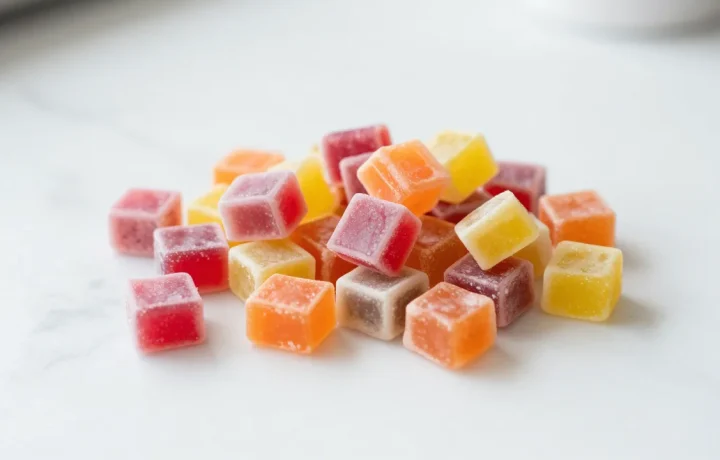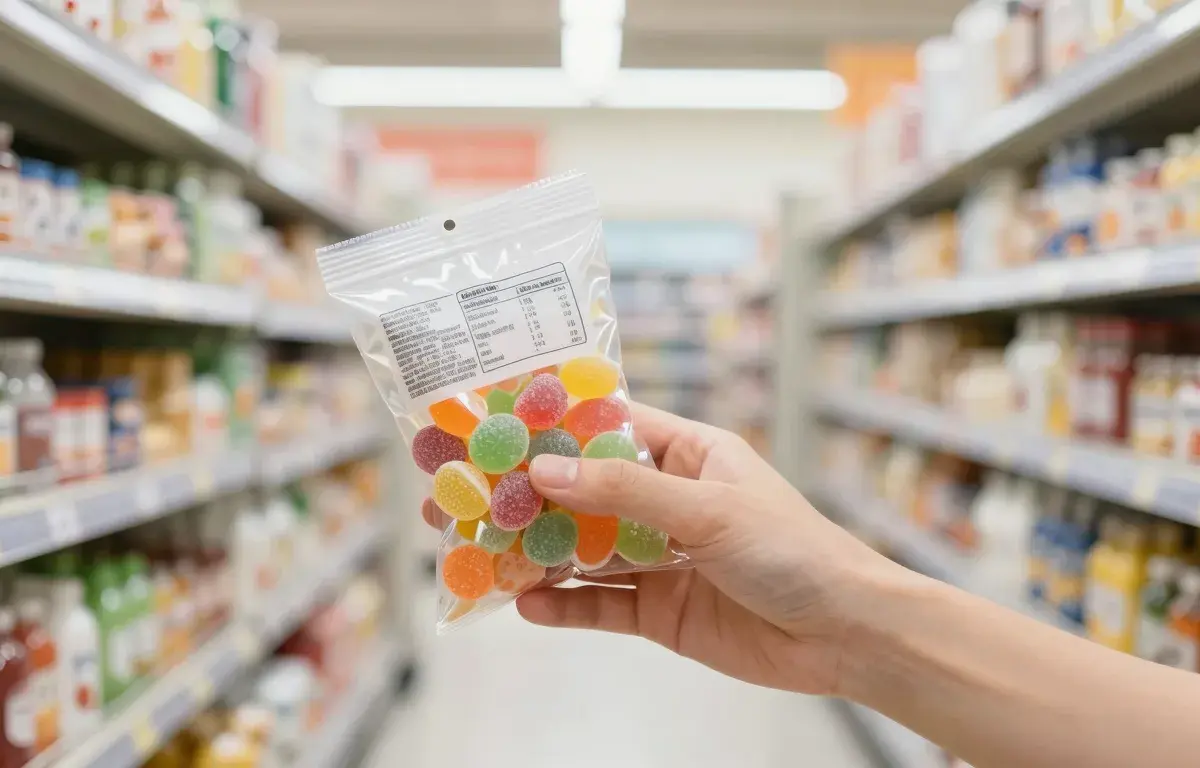
Classic Sour Patch Kids sold in the United States are not marketed as kosher. Mondelez, the company that makes them, lists its US-made Sour Patch Kids as "Kosher: No" in its own product data. The candy has no gelatin, but that alone does not make it kosher. The hechsher printed on the bag in your hand is what decides.
The short answer on Sour Patch Kids
No, not in the usual US bags. Mondelez’s own foodservice product pages for US-made Sour Patch Kids, including the 2 oz bag, the theater box, and the watermelon version, all show "Kosher: No." The OU’s kosher product search lists several licensed Sour Patch Kids items, but not the candy itself (checked October 2026).
That surprises many people, because the ingredient list looks harmless. A gelatin free recipe is a good start, but kosher status comes from certification. Certification is printed near the ingredients, so the symbol has to be on the exact bag you are holding.
If a bag does show a hechsher you trust, follow that symbol for that bag. If it shows nothing, treat it as uncertified, whatever the ingredient list says.
What is actually in Sour Patch Kids
The reason Sour Patch Kids confuse people is the ingredient list. Unlike many chewy candies, the US recipe uses no gelatin at all.
According to Mondelez, the base is sugar, invert sugar, and corn syrup. The chewy texture comes from modified corn starch rather than an animal gelling agent. The sour hit comes from tartaric acid and citric acid, plus natural and artificial flavor and artificial colors.
Gelatin is the ingredient that pulls most gummy candies into a kosher question, since it often comes from non-kosher animal sources. You can read more in the guide on whether gummy bears are kosher, where gelatin is the whole story.
Even with a clean looking ingredient list, the certification still matters. Flavor sourcing, processing aids, and shared equipment are things a home shopper cannot see, which is exactly what a hechsher checks on your behalf. No gelatin means one common problem is absent. It does not mean the product is kosher.
The hechsher to look for on the bag
A hechsher is the small symbol of a kosher agency, such as the OU, OK, Star-K, or cRc. It is usually printed near the ingredient panel or the product name, not in the front artwork.
For Sour Patch Kids, the useful check is simple: is there a symbol at all? Mondelez does not list its US Sour Patch Kids candy as kosher, and the OU product search does not show it either. What the OU database does show is licensed products that carry the Sour Patch Kids name, such as ice pops listed as pareve and Oreo and Chips Ahoy cookies listed as OU-D, which means dairy.
Different communities trust different agencies, and standards vary from rav to rav. If your household follows a specific set of hechsherim, treat the printed symbol as the deciding factor, not the brand name or a list you read online.
Do the recipes change by country
This is where a confident yes or no can lead you wrong. The same brand name can be made with a different formula, in a different plant, for a different market.
Kosher certification is granted per product and per factory, not per brand. So the status of a US bag tells you nothing certain about a bag made for another country, and the reverse is also true.
When you are holding an imported or unfamiliar bag, read that package rather than relying on memory. KosherCheck can help here: take a photo of the product and it reads the symbol and ingredients for that specific item.
Scan the product and KosherCheck checks it against your standards in seconds, with the reasons why.
Flavors, varieties, and the fine print
Sour Patch Kids now come in many forms. There are the originals, watermelon, tropical, berry, and a rotation of seasonal and limited editions.
Each variety is its own product, so a symbol on one bag does not cover another. New flavors can use different colors or flavor systems, and certification has to be confirmed on each specific package.
The Sour Patch name also appears on products from other categories. In the OU database, the Sour Patch Kids ice pops are listed as pareve, while the Sour Patch Kids Oreo and Chips Ahoy cookies are listed as OU-D. That is a good reminder that the letter next to the symbol matters as much as the symbol.
For a similar candy where the color additive drives the whole conversation, see the write up on whether Skittles are kosher. It is a good example of how two similar looking candies can raise different questions.
How to check any candy in seconds
You do not need to memorize every brand and every symbol. The skill that actually helps is reading the package in front of you.
Look for the hechsher first, confirm it is one you trust, then scan the ingredients for the usual flags like gelatin, carmine, or a dairy note. That habit works on any candy in any aisle.
If you do not want to hold the whole list in your head, KosherCheck can do the reading. Take a photo of the product, and it flags the hechsher and ingredients against the standards you set, then tells you why. It is a detection tool that speeds up the check, not a substitute for your own rabbi on a real question.
For more everyday candy questions, the is it kosher answers walk through the brands people ask about most.
Frequently asked questions
KosherCheck offers informational guidance and detects certifications and ingredients. It is not a halachic ruling. For a final decision, consult your rabbi.