Wine holds a unique place in kosher law. Even when it is pressed from nothing but grapes, wine is kosher only if observant Jews handle it from the crush through the bottling, under a trusted hechsher. That single rule explains almost everything on a kosher wine label.
The short answer
Wine is kosher only when it is produced entirely by Sabbath-observant Jews, from the moment the grapes are crushed until the bottle is sealed. This is true even though grapes themselves are a kosher fruit.
No other everyday food works this way. A bag of plain sugar or a sack of flour is kosher on its own merits. Wine is judged by who made it, not only by what is in it.
For that reason, you cannot decide a wine is kosher just by reading the ingredient list. You look for a reliable hechsher, the certification mark that tells you observant supervision was in place.
The rules around opened bottles and handling can get detailed, and communities differ on some points. For anything beyond the basics here, ask your own rav.
Why wine is different from other foods
Wine has carried religious meaning for thousands of years. In the ancient world it was poured as an offering to idols, so the sages placed special restrictions on wine touched or produced by non-Jews.
Two terms come up here. Yayin nesech refers to wine actually used for idol worship. Stam yeinam refers to ordinary wine handled by non-Jews, which the sages also restricted as a safeguard.
The practical result is simple. Grape wine and grape juice must be produced under Jewish supervision to be kosher, even when every ingredient is fine on its own.
This uniqueness is limited to grapes. The same grapes eaten fresh, or raisins, or apple juice, carry none of these wine restrictions. It is the pressed and fermented grape product that the law singles out.
What makes a wine kosher
Three things generally have to line up before a wine earns a reliable kosher certification.
First, observant handling. Every stage that touches the grape juice, crushing, fermentation, filtering, and bottling, is carried out by Sabbath-observant Jews.
Second, kosher ingredients and equipment. Some wineries clarify their wine with fining agents such as gelatin, casein, or isinglass from fish. A kosher wine uses only acceptable fining materials, and the equipment itself is kosher.
Third, certification. A recognized agency supervises the winery and grants a hechsher, which then appears on the label. Agencies like the Orthodox Union publish which wineries they certify.
Mevushal wine: why it matters at events
You will often see the word mevushal on a kosher wine label. It means the wine was boiled or, in modern practice, flash-pasteurized.
Mevushal wine keeps its kosher status even if a non-Jew pours or handles it after the bottle is opened. That is why caterers, restaurants, and wedding halls almost always stock mevushal wine.
Non-mevushal wine is different. Many opinions hold that if it is opened and handled by a non-Jew, it can lose its kosher status. At an event with non-Jewish servers, this distinction matters.
Some people feel mevushal wine tastes slightly different because of the heating, though modern flash-pasteurization has narrowed that gap. Whether to prefer mevushal in a given situation is a question for your rav.
Scan the barcode or label and KosherCheck checks it against your standards in seconds, with the reasons why.
Reading a kosher wine label
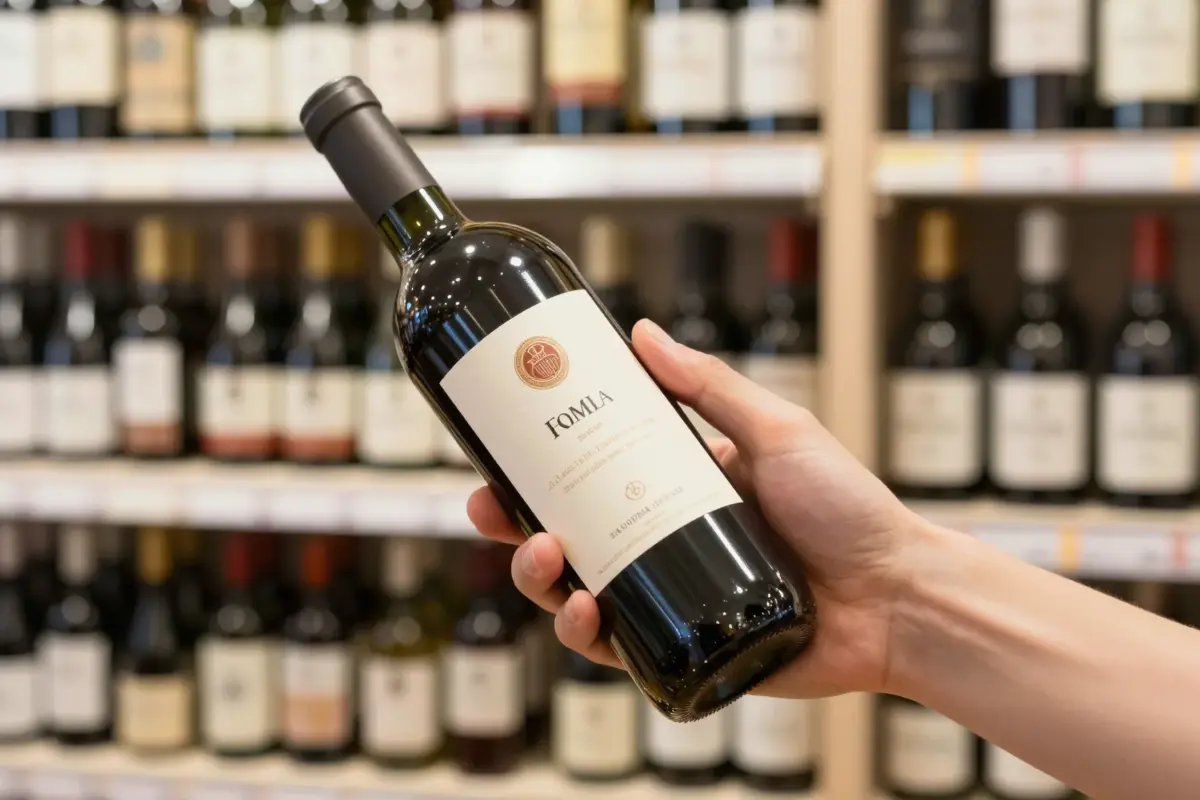
The fastest way to judge a wine is to find the certification mark, usually near the front label or on the back.
A reliable hechsher from a recognized agency is the key sign. If the wine is mevushal, that word or an M often sits alongside the symbol. A separate Passover mark tells you the bottle is kosher for Passover.
If a bottle carries no hechsher at all, treat it as not kosher for these purposes, even if the grapes and additives sound fine. Wine is the one category where an unsupervised product simply does not qualify.
When I am standing in a shop and cannot place an unfamiliar symbol, I scan it with KosherCheck. The app reads the label, identifies the certification, and tells me whether it fits the standards I keep, in seconds. If you want more product breakdowns like this, browse our is it kosher guides.
Grape juice, brandy and other grape products
The wine rules reach beyond the bottle you drink with dinner.
Grape juice follows the same logic. Pure grape juice needs kosher supervision for the same reason wine does, so look for a hechsher there too.
Wine vinegar, grape must, and some grape concentrates used inside other foods also draw on these rules. This is why a sauce or dressing made with wine needs certification, not just kosher grapes.
Brandy, cognac, and grappa are distilled from wine, so they generally need kosher certification as well. Many other spirits, such as most plain vodka or whisky, do not share the grape issue, though they can raise separate questions about flavorings and casks.
If you cook with wine often, checking each bottle by hand gets tedious. Scanning with KosherCheck against your own list saves time, since it flags the grape-based products that need a hechsher.
Kosher wine for Passover
Wine has a natural place at the Passover table, from the four cups at the seder to the meals across the week.
For Passover, a wine needs its own kosher for Passover certification, not just a regular hechsher. The concern is that processing aids or added ingredients could involve chametz.
Grape juice for those who prefer it, and wine for the seder, should both carry the Passover mark. You can read more in our complete guide to kosher for Passover.
Sweet or dry, red or white, the color and style do not change the kosher question. What matters is the supervision behind the bottle. For the finer points of which wines suit your seder, follow your own rav and community custom.
Frequently asked questions
KosherCheck offers informational guidance and detects certifications and ingredients. It is not a halachic ruling. For a final decision, consult your rabbi.