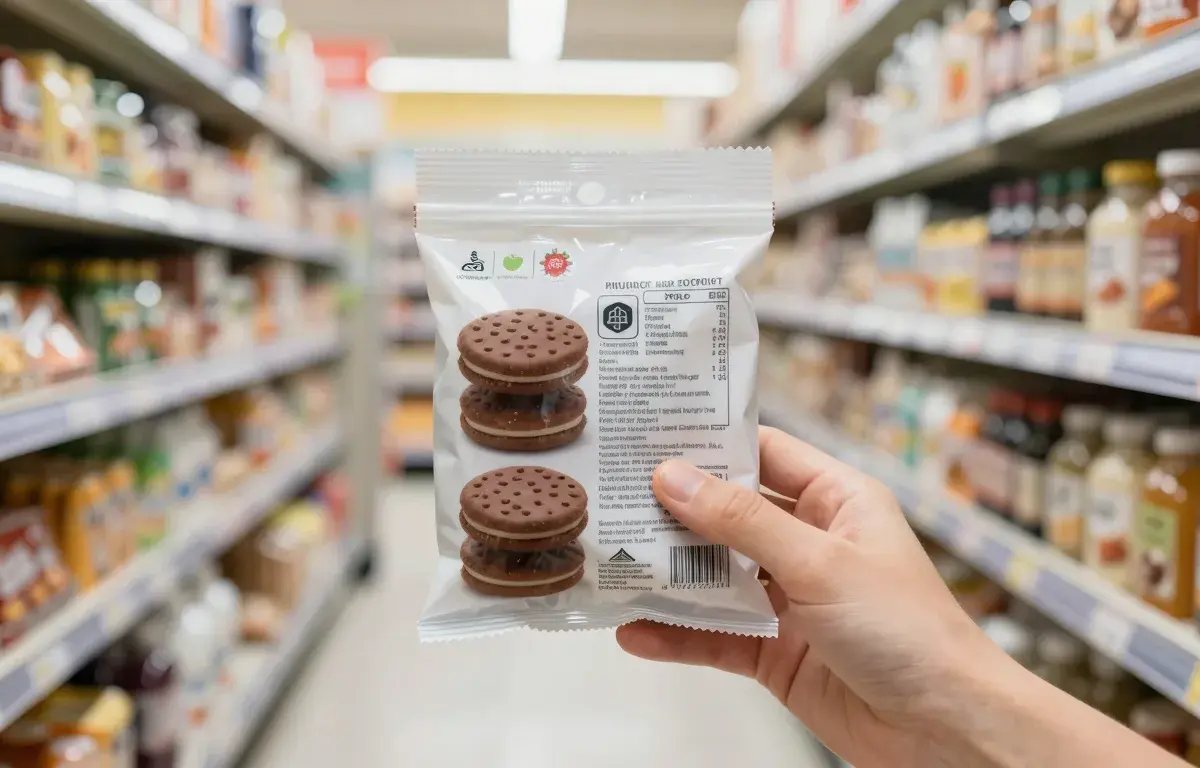
Yes, Oreos sold in the United States are kosher. Every standard variety carries OU-D certification from the Orthodox Union, meaning they are certified kosher dairy. Outside the US the answer gets more complicated, and this guide walks through exactly what to check on the package.
The Short Answer: US Oreos Are Kosher
Walk down the cookie aisle of any American supermarket and pick up a package of Oreos. Turn it over and look near the ingredient list, and you will find a small OU-D symbol. That mark means the Orthodox Union certifies the cookie as kosher dairy, and it appears on every standard variety sold in the United States.
Oreos were one of the first products I learned to check as a kid, because every lunchbox at school seemed to have them. The answer for American shoppers today is reassuringly simple. The OU reviews every ingredient, supervises the bakeries, and audits the production lines on an ongoing basis.
The full picture has a few wrinkles worth understanding. The D next to the symbol raises questions about eating Oreos after meat, and packages sold outside the US play by different rules.
The Lard Years: Why Oreos Were Off Limits for Decades
Oreos launched in 1912, and for most of the twentieth century they were firmly off the kosher table. The creme filling was made with lard, which is rendered pork fat, about as clearly non-kosher as an ingredient can get.
Nabisco removed the lard in the 1990s during a broader recipe overhaul. Earning the OU symbol took far more than swapping one ingredient. The ovens and equipment had baked with animal fat for decades, so the machinery itself needed to be koshered.
The OU worked with Nabisco to kosher the enormous band ovens, some of them 300 feet long, applying intense heat along every section. The OU mark began appearing on packages in 1998, and a whole generation of kosher keepers finally tasted their first real Oreo. It remains one of the most famous kosher certifications in American food history.
What OU-D on the Package Actually Means
The OU is the largest kosher certification agency in the world, and the letter beside its symbol carries real information. A plain OU circle means the product is pareve, neither meat nor dairy. OU-D means dairy, either because the product contains a dairy ingredient or because it is made on dairy equipment.
Here is the detail that surprises people about classic Oreos. Read the ingredient list on a regular package and you will not find milk anywhere in it. The OU marks the cookies D because the production lines also handle dairy products, and the OU generally prints D rather than a separate DE designation.
If certification letters are new to you, our certification guides walk through what each mark means. You can also look up any product’s current status through the Orthodox Union directly. And if you are just starting out with the basics, our beginner’s guide to kosher covers the foundations.
Scan the barcode or label and KosherCheck checks it against your standards in seconds, with the reasons why.
Can You Eat Oreos After Meat?
Kosher law requires a waiting period between eating meat and eating dairy, so the D on an Oreo package raises a practical question. Can you serve Oreos for dessert after a chicken dinner?
Because classic Oreos list no actual milk ingredients, many authorities treat them as a dairy-equipment product rather than true dairy. Some communities permit dairy-equipment items directly after meat, while others wait the full period for anything marked D. Practice varies widely here, so ask your own rav what your family should follow.
One caution applies across every community. Several Oreo varieties do contain real dairy, including fudge-covered Oreos and Oreo Cakesters, where milk appears plainly in the ingredient list. Those are dairy in the fullest sense, and no opinion permits them straight after a meat meal.
Oreos Outside the US: Check Before You Snack
Mondelez bakes Oreos in plants around the world, and the American OU certification does not travel with the brand name. A package bought in London, Madrid, or Mexico City comes from a different bakery with its own supervision status.
In the UK and Europe, check the current list from your local authority, such as the KLBD in London, before assuming the local package matches the American one. Formulations differ between markets too, since some countries use different fats, emulsifiers, and flavorings in the same branded cookie.
This is where I lean on my phone. When I shop abroad, I photograph the label and let KosherCheck read the ingredients and look for a hechsher, weighing everything against the standards I have set for my family. For country-specific advice, our travel guides cover shopping kosher around the world.
Which Oreo Varieties Are Kosher?
The core lineup sold in the United States carries OU-D certification across the board. That includes regular Oreos, Double Stuf, Mega Stuf, Golden, Thins, and the familiar seasonal shapes that show up around holidays.
Limited editions deserve a closer look. Mondelez releases dozens of novelty flavors each year, and while most carry the same OU-D, a new coating or filling can change the dairy status or the certification itself. The symbol on the package in your hand is the only one that counts, not last year’s version of the same flavor.
Habits like these become second nature with practice. Until then, KosherCheck handles the fifteen-second check for you, scanning the barcode, spotting the certification, and flagging any ingredient that deserves a second look based on your own standards. For more product answers, our is it kosher archive grows every week.
Frequently asked questions
KosherCheck offers informational guidance and detects certifications and ingredients. It is not a halachic ruling. For a final decision, consult your rabbi.