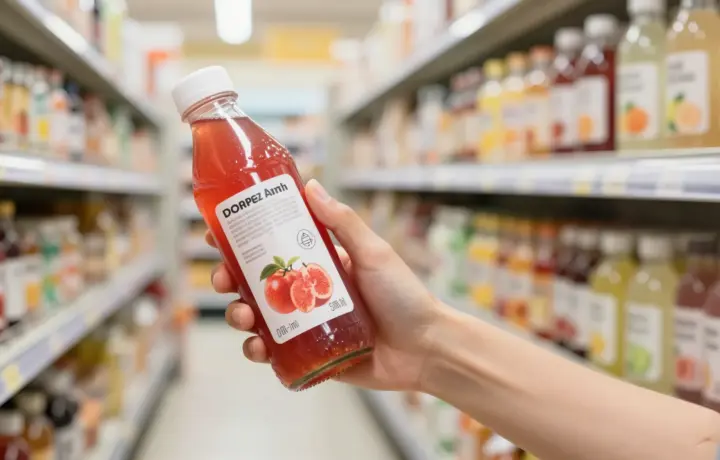
Carmine is not kosher. It is a red dye made from crushed cochineal insects, and since kosher law forbids eating insects, no reliable certifying agency will approve a product that contains it. The hard part is spotting carmine on a label, because it hides under several different names.
What Carmine (E120) Actually Is
Carmine is a deep red pigment, and it is one of the oldest color additives still used in food today. On labels it shows up as carmine, cochineal extract, carminic acid, Natural Red 4, or the E number E120.
The color does not come from a plant. It comes from the cochineal, a tiny scale insect that lives on prickly pear cactus and is farmed mostly in Peru and the Canary Islands. The insects are harvested, dried, and crushed, and the red carminic acid is drawn out of their bodies.
The reason manufacturers still reach for it is simple. Carmine gives a rich, stable red that holds up to heat and light better than many plant based colors, so it lasts on the shelf. That is also why it turns up in so many pink and red products.
Why Carmine Is Not Kosher
The first thing I check when a red product has no symbol is whether the color could be carmine, because insects are the issue here. Kosher law forbids eating the vast majority of insects, and carmine is drawn straight from an insect’s body.
Because of that origin, the major certifying agencies treat carmine as non-kosher. A product that contains it will not carry a reliable hechsher from agencies like the OU, OK, or Star-K. When I see one of their symbols, I already know carmine is not in the package.
There has been real rabbinic discussion over the years about whether an extracted color counts as a new substance rather than the insect itself. I am not a rabbi, and this is exactly the kind of question where you follow your certifying agency and ask your own rav. At the shelf, the practical rule stays the same. A trusted symbol means no carmine, and a red product without one deserves a closer look.
It helps to separate two questions people mix up. Carmine is an animal product, so it is also not vegan or vegetarian, but that is a different concern from kashrut. A food can be free of meat and still be non-kosher because of a color like this one.
The Names Carmine Hides Under
Carmine is hard to catch because it travels under several names. Reading the color line on the ingredient panel is the skill that matters most here.
Watch for all of these: carmine, cochineal, cochineal extract, carminic acid, Natural Red 4, Crimson Lake, C.I. 75470, and E120. They all point back to the same insect source.
Vague wording is the other trap. A phrase like color added or natural color does not tell you what the color actually is. In many countries carmine now has to be named specifically, but rules differ by region, so an unnamed natural color on an imported red product is worth a pause.
Scan the barcode or label and KosherCheck checks it against your standards in seconds, with the reasons why.
Foods That Often Contain Carmine
Once you know the names, you start seeing carmine everywhere in the pink and red aisle. It is common in strawberry and raspberry flavored yogurts, fruit juices and juice drinks, and many candies and gummies.
It also shows up in places that surprise people. Imitation crab and other surimi products often use it, along with some red sausages, maraschino cherries, red velvet baked goods, certain ice creams, and the rind of a few aged cheeses. Cosmetics like lipstick use it too, though that is a separate conversation from food.
This is exactly the situation where I lean on a quick scan instead of memorizing every brand. If I am standing in the aisle and a strawberry yogurt has no symbol, I will use KosherCheck to read the label and flag whether carmine or another animal derived ingredient is hiding in it.
What a Kosher Symbol Tells You
A reliable kosher symbol does a lot of quiet work for you on this issue. When an agency certifies a product, it has already checked the source of every color, including the reds. Carmine will not be sitting behind a trusted hechsher.
That is why I always read the symbol before I read the ingredient panel. If you want to understand what the different marks and their added letters mean, our guide to kosher certification letters walks through them, and you can browse more in the ingredients category.
The harder case is a product with no symbol at all, which is where most carmine questions come from. For those, reading the label is your real tool, and an app can speed it up. Point KosherCheck at the barcode or the ingredient list and it will detect the hechsher, read the ingredients, and judge the product against the standards you set, so you are not squinting at fine print in the store.
Kosher-Friendly Red Alternatives
The good news is that carmine is easy to replace, and many brands have already moved on. If you are looking for a red that is not an insect, several plant based options do the job.
Common alternatives include beet juice, sometimes listed as betanin or E162, along with lycopene from tomatoes, paprika extract, and anthocyanins from red cabbage or purple carrot. Synthetic reds such as Red 40 and Red 3 are another route, and they are generally acceptable when the finished product carries a reliable kosher symbol.
You do not have to memorize which brand uses what. The same animal versus plant logic that trips people up with color also comes up with other ingredients, which is why the questions around gelatin and other animal derived additives feel so familiar. Learn to read the label, lean on a trusted symbol, and check anything that stays unclear.
Frequently asked questions
KosherCheck offers informational guidance and detects certifications and ingredients. It is not a halachic ruling. For a final decision, consult your rabbi.