Pareve means a food has no meat and no dairy, which lets it sit at either a meat or a dairy meal. It is one of the three core kosher categories, alongside meat and dairy. Knowing how to spot it on a label saves you from mixing what kosher law keeps apart.
What Pareve Actually Means
Pareve is the kosher category for foods that contain no meat and no dairy. The word comes from Yiddish, and you will also see it spelled parve or parev. A pareve food sits in a neutral zone, which means it can be eaten alongside a meat meal or a dairy meal.
This neutral status is the whole point. Kosher law keeps meat and dairy strictly apart, from cooking to serving to the dishes you use. Pareve foods move freely between both worlds, which makes them the quiet workhorses of a kosher kitchen.
There are three kosher groups: meat, dairy, and pareve. Meat covers kosher animals and poultry. Dairy covers milk and anything made from it. Pareve is everything that is inherently neither, from an apple to a plain slice of bread. For a fuller breakdown, see our guide to the kosher categories.
Which Foods Are Naturally Pareve
Most foods that grow from the ground are pareve in their natural state. That includes fruits, vegetables, grains, legumes, nuts, and seeds. Coffee beans, tea leaves, sugar, and salt fall in the same group.
Eggs from kosher birds are pareve, which surprises some shoppers. So is fish that has fins and scales, though fish carries a custom I will come back to later. Water is pareve, and so are most pure oils pressed from plants.
The catch is the phrase in their natural state. A raw almond is pareve. An almond cookie baked on dairy equipment may not be. Processing is where pareve foods can quietly change category, which is why the label matters more than the raw ingredient.
How Pareve Shows Up on a Label
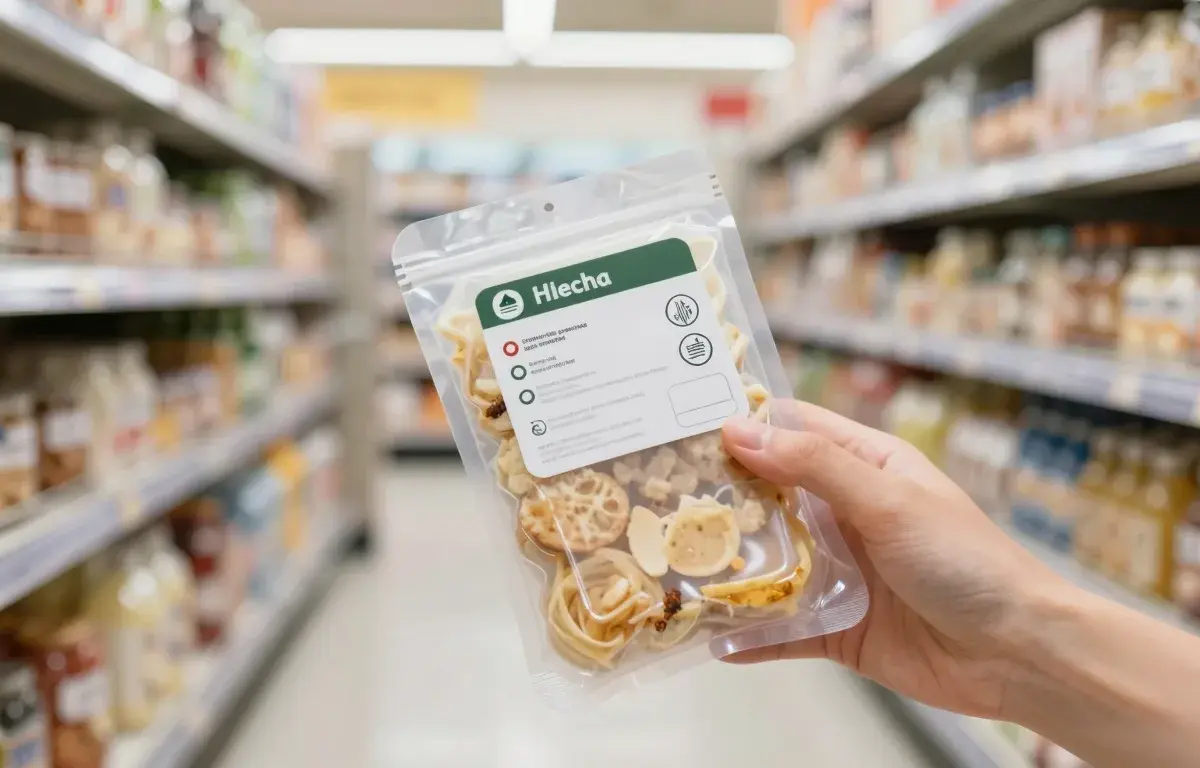
On a certified product, pareve status is usually printed right next to the kosher symbol. You might see the word pareve, the spelling parve, or nothing at all after the symbol. A plain OU with no letter following it generally signals a pareve product.
Compare that to a dairy product, which carries a D or the word Dairy after the symbol, as in OU-D. A meat product carries an M or Meat. When you see none of these letters, the item is most often pareve.
One label deserves special attention. The marking DE, as in OU-DE, means dairy equipment. The food has no dairy ingredients, but it was made on equipment also used for dairy. Communities treat DE items differently, so this is a good moment to know your own standard.
If keeping the letters straight feels like a lot, an app like KosherCheck can read the symbol and its designation for you and flag whether a product reads as pareve, dairy, or meat.
Scan the barcode or label and KosherCheck checks it against your standards in seconds, with the reasons why.
When Pareve Is Not So Simple
Pareve is a clean idea that meets a messy food supply. The most common wrinkle is shared equipment. A cracker with no dairy ingredients can pick up a dairy designation if it runs on a dairy line, which is where that DE marking comes from.
There is also a concept of nullification, where a tiny trace of dairy in a large batch may not change the food’s status. This is a halachic judgment, not something you can eyeball at the shelf. When a product’s status is unclear, that is a question for your rav, not for a label reader.
Milk itself brings its own layer, since some families keep to Chalav Yisrael standards. A food can be labeled pareve and still raise separate questions about how it was produced. Our guide to Chalav Yisrael and Chalav Stam walks through that distinction.
Certification agencies exist to answer these questions so you do not have to guess. Groups like the Orthodox Union publish detailed policies on how dairy equipment and trace ingredients affect a product’s status.
Fish, Eggs, and the Pareve Gray Zone
Fish with fins and scales is pareve, but it comes with a widely kept custom. Many communities do not eat fish and meat on the same plate, based on longstanding tradition. The fish stays pareve, yet the practice keeps it off the meat plate.
Eggs are pareve as long as they come from a kosher bird and contain no blood spots. A blood spot can render an egg problematic, which is why some people check eggs before using them. The pareve status holds, but the inspection habit is worth keeping.
These cases show why pareve is a starting point, not a finish line. The category tells you what a food is, while custom and certification tell you how to use it. When traditions vary, and they do, your rav is the right address.
The Pareve Label Check That Takes 15 Seconds
You do not need to memorize every rule to shop with confidence. A short, repeatable check covers most products on the shelf. Run the same steps every time and the label starts to read itself.
The reason this matters goes back to the meat and dairy divide. If you serve a dessert after a meat meal, you need it to be pareve, not dairy. One missed D on a chocolate bar can turn a kosher dinner into a problem, which is why the habit is worth building. For more starting points, our kosher guides cover the basics step by step.
Keeping all of this straight across a full cart is where a tool helps. When I shop for my family, I lean on KosherCheck to scan a label and confirm whether a product reads as pareve, dairy, or meat against my standards. It reads the hechsher and the ingredients in seconds, though the final call on anything borderline still belongs to your rav.
Frequently asked questions
KosherCheck offers informational guidance and detects certifications and ingredients. It is not a halachic ruling. For a final decision, consult your rabbi.