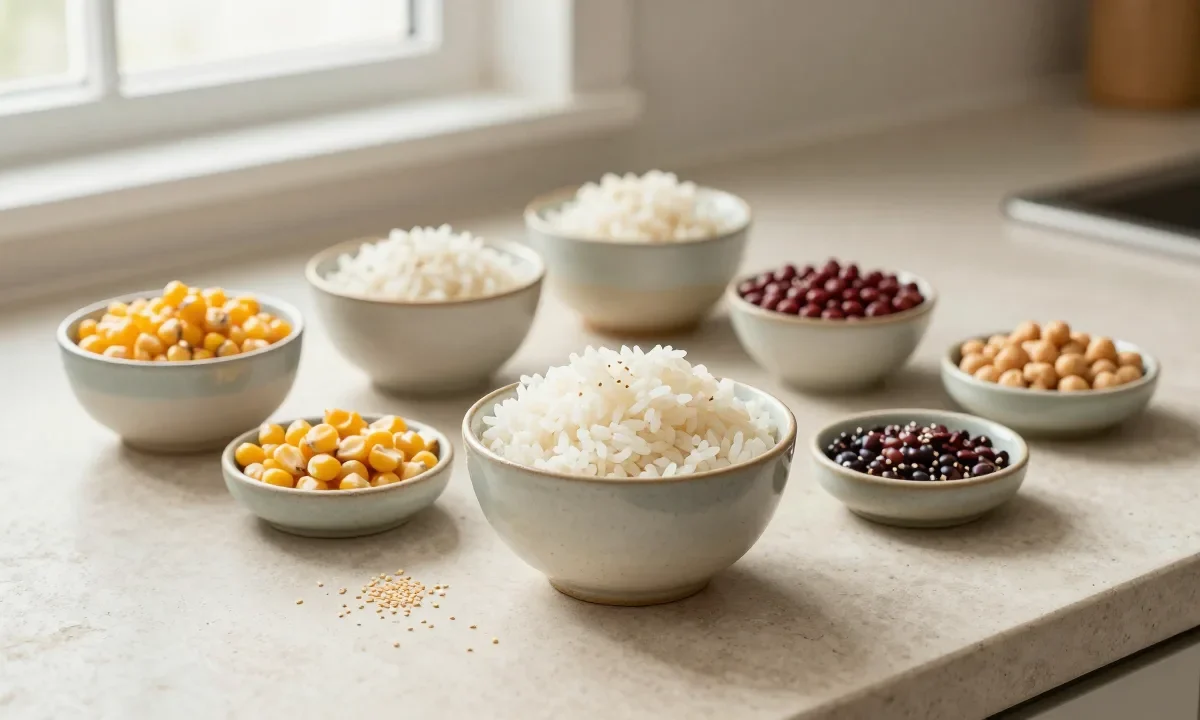
Kitniyot are rice, corn, beans, lentils, peas and certain seeds that Ashkenazi custom avoids eating on Passover. They aren’t chametz, so you may own them and keep them at home. Many Sephardic communities eat them. On a package, look for a Passover hechsher, and for wording such as “for those who consume kitniyot” on products that contain them.
Kitniyot is the Passover name for a group of foods that aren’t chametz but that Ashkenazi communities have avoided eating for more than 700 years. The core list is rice, corn, millet, buckwheat, beans, lentils, peas, chickpeas, soybeans, mustard, and sesame, poppy and sunflower seeds. Potatoes, coffee, tea, garlic, nuts and olives aren’t included. Peanuts and quinoa are disputed: the Orthodox Union says present-day practice treats peanuts as kitniyot, while STAR-K holds that quinoa isn’t kitniyot but needs reliable Passover approval. The custom restricts eating only. Kitniyot may be owned, kept at home and used, and they don’t have to be sold with the chametz. On packaged food the hard part is derivatives such as corn syrup, soybean oil and citric acid, which agencies treat differently, so the label’s Passover certification matters more than the ingredient list. Products certified for people who eat kitniyot state it, usually with the words “for those who consume kitniyot on Passover.” Most Sephardic communities eat kitniyot, though customs vary, so ask your rav which practice applies to your family.
What Kitniyot Means
Kitniyot (also spelled kitniyos or kitniot) is usually translated as “legumes,” but the Passover category is wider than that. STAR-K’s guide to kitniyos cites the Shulchan Aruch’s definition: foods that can be cooked and baked in a way similar to the chametz grains, yet aren’t in the same category as chametz. Rice, corn, peas, mustard seed and every variety of bean are its examples.
The difference from chametz matters. Chametz comes only from wheat, barley, rye, oats and spelt, and on Passover it can’t be eaten, owned or used for benefit. Kitniyot never become chametz. The custom covers eating them, and nothing more.
It also covers only part of the plant. STAR-K notes that the roots and greens of these vegetables aren’t kitniyot, and that Ashkenazim avoid only the seeds.
Kitniyot List: What Counts and What Doesn’t
No single rule sorts every food. The Orthodox Union explains that because the practice is a binding custom, whatever was accepted as kitniyot over the generations is avoided and everything else stays permitted. This table combines OU Kosher’s kitniyot list, its longer article and STAR-K’s guide.
| Treated as kitniyot | Not kitniyot | Disputed or needs extra care |
|---|---|---|
| Rice, corn, millet, buckwheat (kasha) | Potatoes | Peanuts |
| Beans, lentils, peas, chickpeas | Coffee and tea | Quinoa |
| Green beans, soybeans, edamame | Garlic, radishes, olives | Amaranth |
| Sesame, poppy and sunflower seeds | Nuts | Fenugreek |
| Mustard | Anise, coriander, cumin | Cottonseed oil |
| Cardamom, fennel seeds, canola (rapeseed) oil | Olive, palm, coconut and walnut oil |
A few rows need a note. The OU’s poskim don’t count anise, coriander and cumin as kitniyot, but they say these spices need special care because kitniyot and even chametz grains are often mixed in. Fenugreek sits on OU Kosher’s kitniyot list, and its article says other agencies disagree. OU Kosher reports that cottonseed oil is generally not treated as kitniyot in the United States, while some in Israel avoid it.
Potatoes show how the list was formed. OU Kosher traces the custom back at least to the Maharil, who died in 1427, and potatoes reached Europe only in the 16th century, so they were never included. Corn is the exception: it arrived late and is treated as kitniyot anyway.
Why the Custom Exists and Who Keeps It
The custom is old. COR, the Kashruth Council of Canada, writes that the earliest literature on kitniyot dates back over 700 years, and that the 13th-century Smak (Rabbi Yitzchak of Korbol) already described it as a practice of many generations.
OU Kosher lists three reasons from the Mishnah Berurah. Kitniyot are harvested and processed like chametz grains. They can be ground into flour and baked, so someone might conclude that grain flour is fine too. And chametz kernels may be mixed in with them.
Ashkenazi communities accepted the custom, and Sephardic communities generally didn’t. Even that split isn’t clean. COR points out that many members of Moroccan communities avoid kitniyot and that some Iraqis don’t eat rice. STAR-K adds that Sephardim who eat kitniyot check the grains three times for stray chametz first.
Outside Orthodoxy the practice differs again: My Jewish Learning notes that the Conservative movement’s Committee on Jewish Law and Standards ruled in December 2015 that kitniyot are permitted. Communities differ, so follow your family’s tradition and ask your rav.
How to Check a Package for Kitniyot
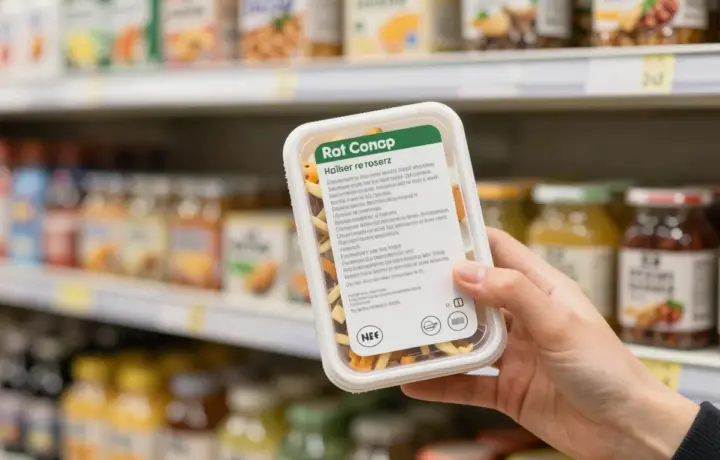
Check a package for kitniyot in the same order every time: the Passover mark first, then the wording around it, then the ingredients. These steps assume you avoid kitniyot. If you eat them, step 2 is the one that matters most.
- Find the Passover mark. Look for “Kosher for Passover” or a P next to the hechsher. A year-round symbol tells you nothing about Pesach, as our guide to which foods need a Passover label explains.
- Read the words around the symbol. Products made for kitniyot eaters say so. STAR-K gives the usual wording as “l’ochlei kitniyot,” followed by “Kosher for Passover for those who consume kitniyot on Passover,” and marks its own Sephardic program with a STAR-S P. If you don’t eat kitniyot, that product isn’t for you.
- Scan the ingredient list for kitniyot by name: rice, corn, soy, peas, beans, sesame, mustard, and oils such as corn, soybean or canola.
- Check for converted ingredients such as corn syrup, citric acid, ascorbic acid or MSG. You can’t tell their source from the label, and agencies treat them differently (see the next section).
- For foods that aren’t kitniyot but grow or get packed near grain, quinoa above all, still look for Passover approval on that exact package.
If the print is small, KosherCheck (Koshera on the App Store) can do the reading. You photograph the front of the package, and the back if needed, and it looks for the hechsher and goes through the ingredients against the standards you chose, kitniyot included. It gives guidance, not a ruling, and the symbol on the package is what counts.
Take a photo of the product and KosherCheck checks it against your standards in seconds, with the reasons why.
Corn Syrup, Oils and Citric Acid: Kitniyot Derivatives
On packaged food, kitniyot often appear as oils, sweeteners and additives instead of whole rice or beans, and this is where certifiers part ways.
Oils. OU Kosher says the accepted practice is to follow the stricter view on kitniyot oil, so corn and soybean oil (often sold as “vegetable oil”) aren’t used on Pesach. Canola is rapeseed oil, which older authorities discuss by name as kitniyot.
Corn syrup. STAR-K explains that the starch in corn is converted to sugar with hydrochloric acid and enzymes, or with acid alone. Those enzymes are commonly derived from barley, which is chametz. Syrup converted by acid alone doesn’t have that chametz issue, but it’s still kitniyot.
Transformed ingredients. Citric acid, ascorbic acid, MSG, sodium citrate, sodium erythorbate and lactic acid can all start as corn or soy. The halachic term is kitniyos shenishtanu, kitniyot changed into something new. Many agencies, the OU among them, accept such derivatives once they’ve gone through a complete chemical change. STAR-K doesn’t: its policy, based on the positions of Rabbi Elyashiv and Rabbi Auerbach, is not to certify products that contain them.
So two packages with the same ingredient list can carry different Passover statuses depending on the certifier. If your community follows one agency’s standard, check which hechsher is on the package, and bring doubts to your rav.
Common Mistakes With Kitniyot
Treating kitniyot like chametz. You don’t need to clear rice and beans out of the house. COR states that people may own, use and benefit from kitniyot, so these products don’t have to be sold with the chametz, and pet food that contains kitniyot may be used. The full chametz process is covered in our kosher for Passover guide.
Assuming “not kitniyot” means “fine for Passover.” Quinoa is the standard example. STAR-K tested it to see whether it would rise. It decayed instead, and since quinoa belongs to the amaranth family, STAR-K doesn’t class it as kitniyot. But it can grow near grain or be processed in shared facilities, so STAR-K allows it only with reliable Kosher for Passover approval.
Forgetting the exceptions. COR writes that, when necessary, sick and elderly people may eat kitniyot, that someone in discomfort may take medication with kitniyot ingredients, and that a baby may be fed formula containing them. OU Kosher adds that this should be done after consulting a rav.
Panicking over a small mix-up. OU Kosher says kitniyot that fell into Passover food by accident is nullified when the other ingredients are the majority, unlike chametz.
For a second check in the aisle, KosherCheck’s Passover mode adjusts its reading of a product for Pesach, and you can set in the app whether you keep kitniyot. Any P or D beside a symbol is explained in our guide to kosher certification letters.
Frequently asked questions
KosherCheck offers informational guidance and detects certifications and ingredients. It is not a halachic ruling. For a final decision, consult your rabbi.