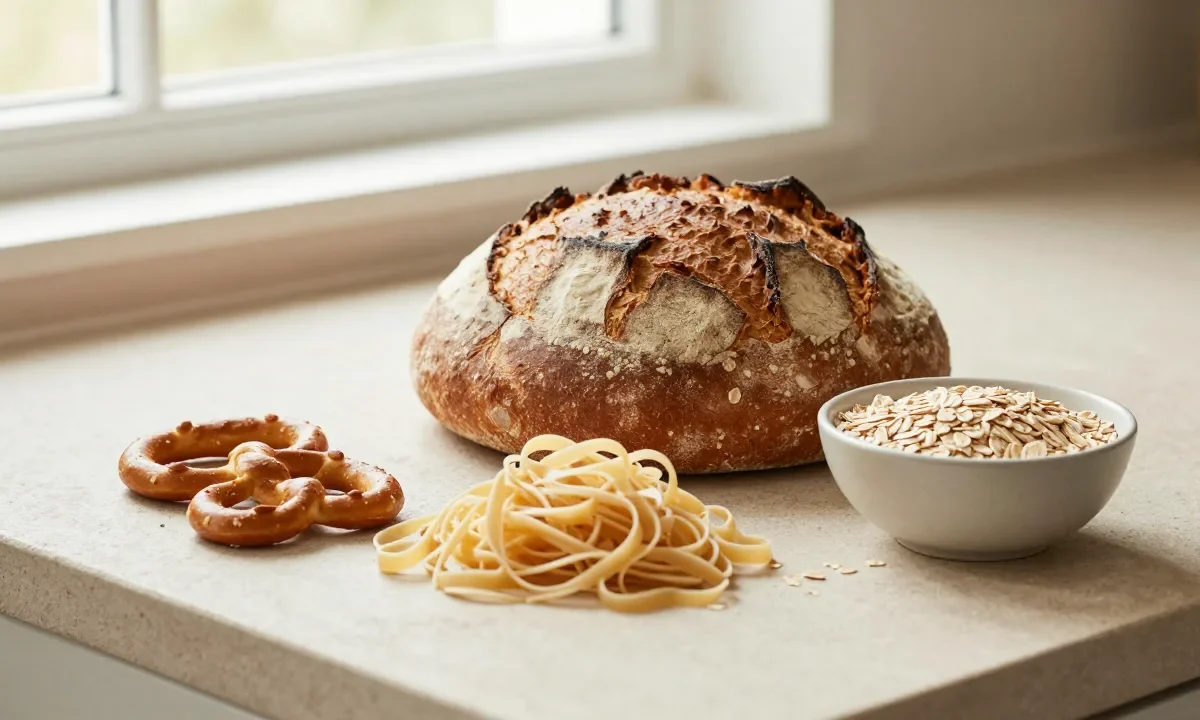
Chametz (also spelled chometz) is any food made from wheat, barley, rye, oats or spelt that has leavened, which happens once the grain sits in water. On Passover it can’t be eaten, owned or used for benefit. Bread, pasta, beer and oatmeal are obvious chametz. On packaged food, look for a Passover hechsher, because the ingredient list alone won’t tell you.
Chametz is the Passover term for leavened grain. Only five grains can become chametz: wheat, barley, rye, oats and spelt. According to the Orthodox Union, they leaven within 18 minutes of touching water, and regular flour already counts because the kernels are soaked before milling. For the whole holiday, chametz can’t be eaten, kept in your possession or used for benefit, which is why homes are searched and leftover chametz is burned or sold beforehand. Some chametz is easy to spot: bread, cake, cookies, pasta, pretzels, beer, oatmeal. Much of it isn’t. STAR-K classes licorice, oat milk, malt extract and wheat-based soy sauce as real chametz, and OU Kosher warns that a gluten-free claim doesn’t mean chametz-free, since oat fiber or wheat-derived vinegar can sit in a gluten-free product. Ingredients like maltodextrin may come from corn or from wheat, and the label doesn’t say. So the working rule for packaged food is certification: look for a hechsher marked for Passover, such as OU-P. Customs differ between communities, so take halachic questions to your rav.
What Counts as Chametz
Chametz starts with five grains: wheat, barley, rye, oats and spelt. The Orthodox Union’s glossary defines it as any of these grains that has fermented or leavened, and says that once they touch water they leaven within 18 minutes. With hot or salted water, it’s instant.
That’s why the category is so much wider than bread. The OU notes that ordinary grain flour comes from kernels that were washed and softened in water before milling, so regular flour, and everything made with it, is already chametz.
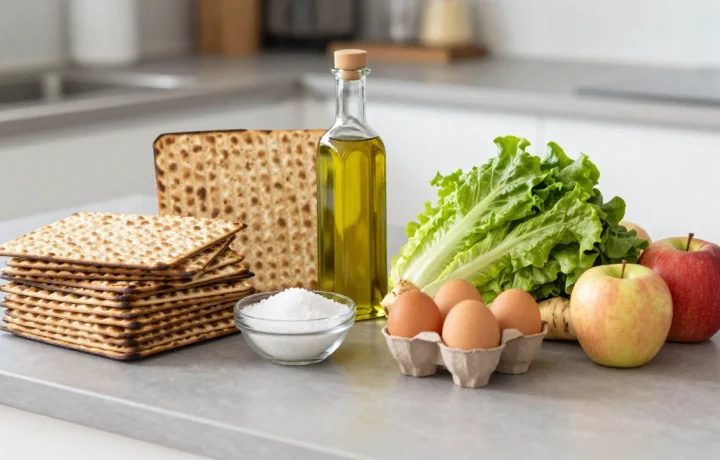
The prohibition also goes beyond eating. On Passover, chametz can’t be eaten or drunk, can’t be kept in your possession, and you can’t benefit from it in other ways. Matzah shows where the line sits: it’s made from the same grains, but baked before the dough has time to rise.
Chametz Food List: Real Chametz and Lookalikes
Bread, cake and pasta are the familiar examples. STAR-K’s chametz chart goes product by product, sorting items into chometz gamur (“real” chametz) and everything else. It was written for people deciding what to sell before Passover, but it doubles as a clear picture of what chametz looks like in a pantry.
| Real chametz (chometz gamur) | Not real chametz, per STAR-K |
|---|---|
| Bread, cake, cookies, pretzels | Ketchup, mustard, mayonnaise, pickles |
| Pasta, couscous, farfel | Vinegar from an unknown source |
| Beer | Maltodextrin from an unknown source |
| Oatmeal, rolled oats, oat milk | Steel-cut oats |
| Cereal based on wheat, oats or barley | Consumer boxes of Corn Flakes or Rice Krispies |
| Licorice | Dry cake mixes |
| Soy sauce that contains wheat | Kitniyot (rice, corn, beans) |
| Malt extract, brewer’s yeast | Baker’s yeast, yeast extract |
The right-hand column is easy to misread. “Not real chametz” doesn’t mean “fine to eat on Passover.” It means the item sits in a lower category for ownership and selling, and STAR-K’s notes say plainly that several of these still may not be eaten on the holiday.
Quantity matters too. A consumer box of Corn Flakes holds less than a kezayis (an olive’s volume) of malt extract, so STAR-K doesn’t class it as real chametz. Industrial-sized boxes likely hold more, and would be.
Where Chametz Hides on Labels
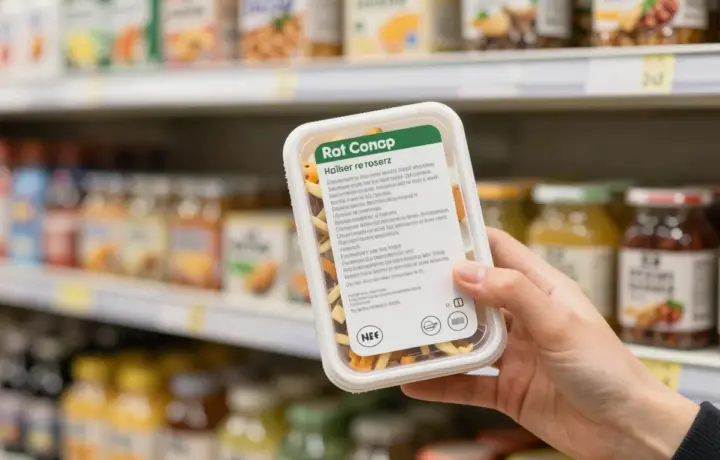
Chametz isn’t always named on the package. OU Kosher and the FDA’s labeling rules point to four label traps.
“Gluten-free” isn’t chametz-free. OU Kosher calls this a common error. Products with oats or oat fiber can be declared gluten-free and still be chametz. Vinegar or ethanol made from wheat is chametz, yet gluten-free.
Ingredients with no stated source. According to the OU, instant coffees often contain maltodextrin, which comes from either corn (kitniyot) or wheat (chametz). The label won’t say which, so all instant coffee needs special Passover certification. Fermentation-derived thickeners, acidifiers and flavors raise the same problem, and the OU says it’s impossible to tell from an ingredient panel.
The allergen line only covers wheat. Wheat is on the FDA’s list of nine major food allergens, but barley, rye and oats aren’t. That leaves a gap: a package that doesn’t flag wheat can still contain three of the five chametz grains.
Shared equipment. OU Kosher says ground spices need Passover certification because they can be processed on equipment that also handles chametz. For a fuller rundown by aisle, see which Passover foods need a special label.
How to Check a Package for Chametz
You can’t rule out chametz from the ingredient list alone, so work in this order.
- Look for Passover certification first: a hechsher with a P beside it (such as OU-P) or the words “Kosher for Passover.” A regular hechsher without it doesn’t cover Passover on its own, though agencies publish lists of specific products that are approved without the P.
- Scan the ingredients for the five grains by name: wheat, barley, rye, oats, spelt.
- Check for grain derivatives: malt or malt extract, wheat gluten or wheat protein, wheat dextrin, oat fiber, and soy sauce made with wheat.
- Flag anything with an unknown source: maltodextrin, vinegar, ethanol, modified food starch, flavors. These need certification to clear.
- Ignore “gluten-free” claims and the allergen line as proof. Neither covers all five grains.
- If you’re still unsure, search the certifying agency’s Passover product list, or ask your rav.
One detail trips people up at step 1: the P means Passover, not pareve. The guide to kosher certification letters covers what each one signals.
If you’d rather not squint at small print, KosherCheck (Koshera on the App Store) can help with the first three steps. Take a photo of the product and it finds the hechsher, reads the ingredient list and checks both against the standards you’ve set, including kitniyot. Its Passover mode adjusts the check for Pesach. It’s guidance, not a ruling. The hechsher on the package is what counts.
Take a photo of the product and KosherCheck checks it against your standards in seconds, with the reasons why.
Before Passover: Search, Nullify, Burn or Sell
Because chametz can’t be owned on Passover, cleaning the kitchen isn’t enough. Jewish practice adds four steps, from the night before the holiday through the next morning:
- Search. A formal search of the home on the night before Passover begins.
- Nullify. A short declaration renouncing ownership of any chametz that was missed.
- Burn. Whatever the search turned up is destroyed the next morning.
- Sell. Chametz you’d rather keep is sold to a non-Jew for the length of the holiday.
Selling chametz is a real legal transaction, not a gesture. STAR-K says the laws are complex and the sale must be made by a competent rabbi or kashrus authority, so arrange it through your rabbi or synagogue.
Communities differ on what to sell. STAR-K describes people who won’t sell real chametz like bread and pasta at all; they eat it, burn it or give it away before Passover, and sell only the lower-category items. Whiskey gets its own line in the chart: follow family custom. For the wider holiday rules, see the kosher for Passover guide.
Buying Chametz After Passover
The restrictions don’t end when the holiday does. Chametz that a Jew owned during Passover stays forbidden afterward. The Hebrew name is chametz she’avar alav haPesach, and STAR-K notes the ban is permanent for that food.
The amount matters. OU Kosher applies the rule to any container holding at least a kezayit of chametz, which it gives as 0.91 ounces. Beer and chametz-based whiskeys are included. Kitniyot isn’t.
Timing matters as well. STAR-K’s buying guide says supermarkets generally turn over stock in two weeks, so chametz sold in the two weeks after Passover was probably there during it. Liquor stores hold inventory for six or seven weeks.
None of this applies to stores owned by non-Jews, or to Jewish-owned stores that properly sold their chametz. Where a supermarket is Jewish-owned or relies on a Jewish distributor, the OU reports that many rabbanim suggest waiting until after Lag B’Omer. Check whether your local kashrus organization publishes a store list, and ask your rav which approach your community follows.
Frequently asked questions
KosherCheck offers informational guidance and detects certifications and ingredients. It is not a halachic ruling. For a final decision, consult your rabbi.