Passover foods are anything free of chametz, and for packaged products that usually means a Kosher for Passover hechsher, not just the regular symbol. A short list of plain staples, like non-iodized salt, extra virgin olive oil and unflavored coffee from listed brands, is approved without one. Ashkenazim also skip kitniyot.
On Passover, observant Jews don’t eat or own chametz: leavened products of the five grains, which are wheat, barley, rye, oats and spelt. Many Ashkenazim also avoid kitniyot, such as rice, corn, beans and lentils, while Sephardim generally eat them. Because factory foods can pick up chametz from shared equipment or hidden ingredients, the safe default for anything processed is a Passover-specific certification, usually shown as a P or the words “Kosher for Passover” next to the agency symbol. The exception is a narrow group of simple products that certifying agencies review each year. For example, the OU’s 2026 Pesach guide approves certain brands of salt only if non-iodized, olive oil only if extra virgin, raisins only if not oil-treated, coffee only if unflavored, and raw meat only in the original manufacturer packaging. Each condition rules out a common variety of the same product, such as iodized salt or light olive oil. Practices differ between communities, so for anything unclear, ask your rav.
Passover Foods at a Glance: The Seder and the Week
When people search for Passover foods, they usually mean one of two things: what goes on the Seder table, or what’s safe to buy for the eight days. This guide is about the second, but the first is quick.
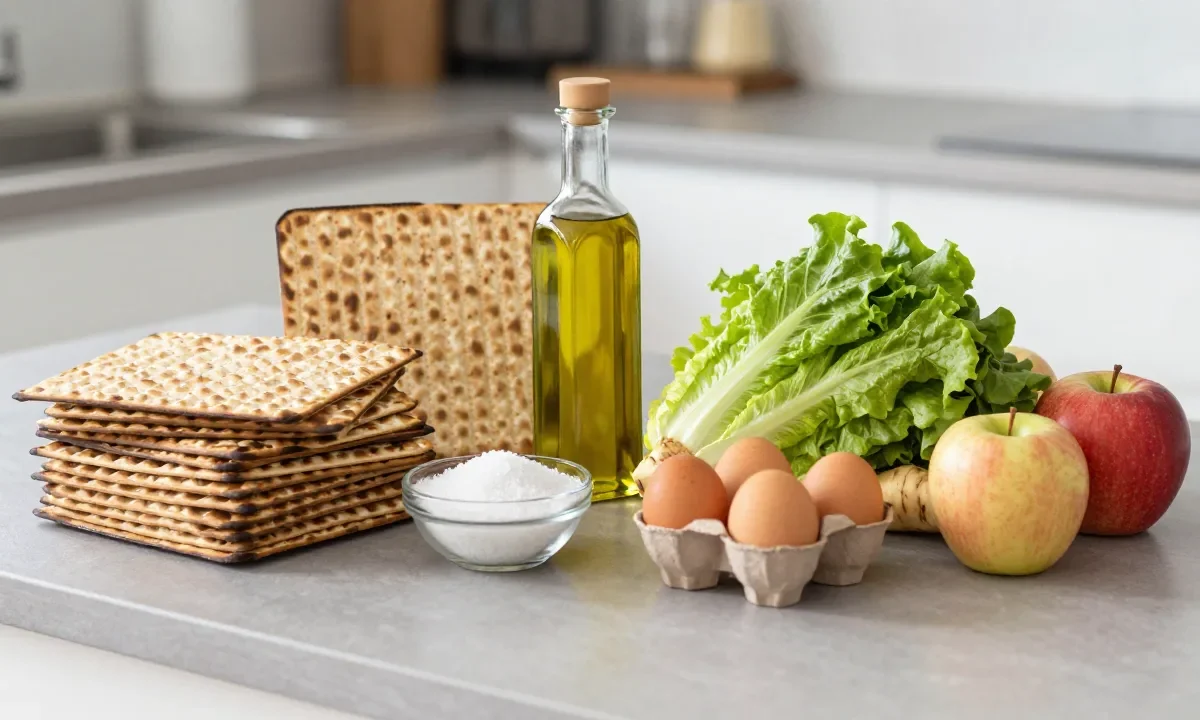
The Seder centers on matzah, four cups of wine or grape juice, and a plate with bitter herbs, charoset, a vegetable, a roasted egg and a shank bone. Each of those needs to be kosher for Passover too.
For the rules behind the label itself, including how matzah is supervised, see our complete guide to what Kosher for Passover means. Below, we stay at the shelf: what to put in the cart, what to leave, and how to read the package in front of you.
How to Shop for Passover Foods, Step by Step
- Set your standards first. Decide, with your family and your rav, whether you eat kitniyot and how strict you are about products like dairy. Everything else depends on this.
- Clear out what’s plainly chametz. Bread, pasta, crackers, regular cereal, cookies, oatmeal, beer and grain whiskey are all made from the five grains. These don’t get a Passover version unless they’re made from matzah meal or a substitute under supervision.
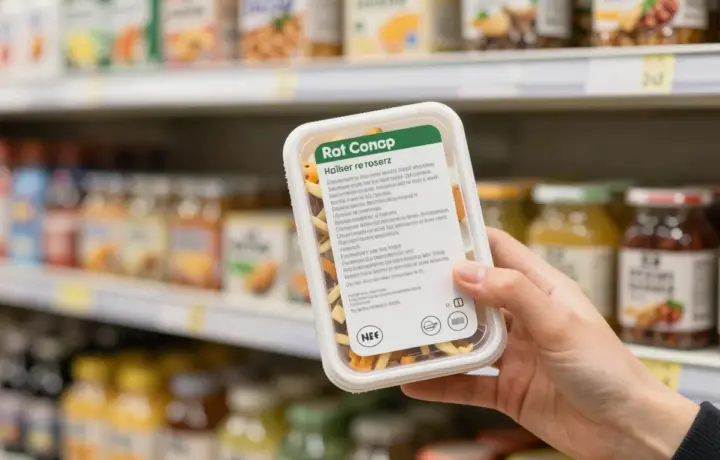
- For any processed food, look for the Passover marking. A regular OU, OK or Star-K means kosher year-round, not for Pesach. You want a P after the symbol or the words “Kosher for Passover” printed with it. Our guide to kosher certification letters explains the difference between P and D or DE.
- Check the short approved list for staples. Some plain items from listed brands are fine with their regular certification. The conditions matter, so read the next section before you buy salt, oil, coffee or raisins.
- Buy raw meat and poultry in factory packaging. If you’re relying on a year-round certification, the package should be the one the plant sealed, not a store repack.
- Double-check anything with a long ingredient list. Sauces, spice blends, candy and drinks are where chametz and kitniyot hide, so these almost always need the Passover hechsher.
Once a product passes, keep it apart from your year-round pantry so it doesn’t get mixed up before the holiday.
Take a photo of the product and KosherCheck checks it against your standards in seconds, with the reasons why.
Staples Approved Without a Passover Symbol (With Conditions)
Each year the OU publishes a list of products that don’t require special Passover certification when they come from specific listed brands. The OU Guide to Pesach for 2026 is a good example of how narrow the conditions are:
| Product | OU 2026 condition | Common mistake |
|---|---|---|
| Salt | Non-iodized only | Grabbing the iodized canister |
| Olive oil | Extra virgin only | Buying light or pure olive oil |
| Coconut oil | Virgin only | Refined coconut oil |
| Raisins | Not oil-treated only | Raisins coated with oil |
| Ground or whole-bean coffee | Unflavored; decaf only from a shorter brand list | Hazelnut or vanilla blends |
| Raw meat and poultry | In original manufacturer packaging, not store repack | Butcher-counter trays |
The same guide lists other staples, such as white and brown granulated sugar, baking soda, unflavored tea bags (not herbal or decaf) and plain bottled water, also brand by brand. Brand matters as much as the condition. A product that isn’t on the list may still be fine, but you can’t assume it, and next year’s list can change. Other agencies publish their own guidance, and communities differ, so follow the list your rav uses.
A Passover Food List by Category
Here’s how the main aisles break down, based on the same OU 2026 guide. The middle column applies only to the brands the guide lists; everything else should carry the Passover marking.
| Aisle | Approved with regular certification (listed brands, OU 2026) | Look for a Kosher for Passover hechsher |
|---|---|---|
| Produce | Raw fruits and vegetables | Bagged salads, cut or seasoned produce |
| Fish | Pure frozen raw fish portions, not spiced, seasoned or smoked | Canned tuna, lox, smoked fish, gefilte fish |
| Nuts | Raw whole nuts, pieces and nut meal with no added ingredients | Roasted, salted or flavored nuts |
| Drinks | Unsweetened juices, unflavored water, unflavored regular tea | Soda, flavored water, wine and grape juice |
| Dairy | None in this list | Milk, butter, cheese, cream cheese, yogurt |
| Pantry | Non-iodized salt, granulated sugar, baking soda, cocoa powder | Baking powder, potato starch, vinegar, sauces, dressings |
| Breakfast and snacks | None in this list | Cereal, cake mixes, cookies, candy, chocolate |
Dairy is where the no-symbol list stops. The guide places milk, butter, cheese and yogurt in its Passover-certified section, split into Chalav Yisrael and non-Chalav Yisrael products, rather than on the no-symbol list. If you keep Chalav Yisrael, our explainer on Chalav Yisrael vs Chalav Stam covers what that standard adds. Wine and grape juice have their own rules year-round, and on Passover they need the Passover marking as well.
Kitniyot: The Ashkenazi and Sephardi Split
Kitniyot aren’t chametz. They’re foods that can be cooked or ground in ways that resemble grain, and Ashkenazi custom avoids them on Pesach. Star-K explains that Sephardim follow the Bais Yosef and eat them, while Ashkenazim follow the Rama, who forbade them.
The OU’s kitniyot list includes beans, chickpeas, corn, lentils, peas, rice, soybeans, mustard, sesame and sunflower seeds, among others. It also names items it doesn’t treat as kitniyot but that may need special checking, such as cottonseed and chia, and it doesn’t use peanuts or amaranth because they may be kitniyot. Star-K notes there are additional considerations about whether peanuts are considered kitniyos at all, so ask your rav what your family follows.
Corn syrup is easy to miss. It comes from corn, so it matters if you avoid kitniyot, and it shows up in sodas, candy and sauces. That’s one more reason those products need the Passover marking.
The kitniyot custom is also narrower than the chametz ban. Star-K notes that you don’t have to sell kitniyot before the holiday and may keep them for non-food uses such as pet food. It adds that the restriction doesn’t apply to medicine, so pills with a corn starch binder are permitted. Medication questions still deserve a call to your rav, especially when a product contains actual grain.
Common Mistakes When Buying Passover Foods
The mistakes below aren’t about obscure ingredients. Each one comes from assuming one version of a product equals another.
- Regular symbol, no P. The year-round hechsher doesn’t cover Pesach. Look for the Passover marking on processed foods.
- The wrong variety of an approved staple. Iodized salt, light olive oil, flavored coffee and oil-coated raisins don’t meet the OU conditions above, even from a listed brand.
- Store-packed meat. A supermarket repack isn’t the original plant packaging that the OU list requires.
- Last year’s list. Approved lists are updated every year, and a brand that qualified last spring may drop off. Use the current one.
- Trusting a lone K. A plain letter K can be printed without any agency behind it. Our post on checking any hechsher shows how to see who stands behind a symbol.
- Forgetting kitniyot oils. If you avoid kitniyot, oils from corn, soybeans or other listed items count too.
Each of these takes a second look at the package before it goes in the cart.
How to Verify Before Pesach 2027
Per Hebcal, Erev Pesach 2027 falls on April 21, and outside Israel the holiday runs from April 22 through April 29. Shop in the weeks before. That leaves time to check each package instead of rushing on the last day.
Start with the hechsher on the package. Confirm which agency it is, then look for the P or the “Kosher for Passover” wording. For a staple without that marking, check the brand and the exact variety against the current year’s list from your agency, such as the OU Passover hub.
A quick checklist for each package:
- The agency symbol is one you recognize and trust.
- There’s a P, or “Kosher for Passover” in words, right next to it.
- If there’s no P, the exact brand and variety appear on this year’s approved list.
- If you avoid kitniyot, the label doesn’t say it’s for those who eat them.
KosherCheck can help with this part. You take a photo of the product, front and optionally back, and it reads the hechsher, the suffix letters and the ingredient list, then checks them against the agencies you trust and your kitniyot setting. The Passover mode adjusts the check for Pesach, and the app can remind you as the holiday approaches.
You’ll get one of three verdicts: Certified, Check required or Not kosher. Treat Check required as a cue to look closer or ask, never as a yes. KosherCheck is guidance, not a ruling: the hechsher on the package is what counts, and for questions of halacha, ask your rav.
Frequently asked questions
KosherCheck offers informational guidance and detects certifications and ingredients. It is not a halachic ruling. For a final decision, consult your rabbi.